How to Help Your Child Manage Anxiety at Home
A tummy ache before school. Tears that seem to arrive from nowhere at bedtime. A child who asks the same worried question again and again, hoping that this time the answer will make the feeling go away. When you want to help your child manage anxiety, it can be tempting to search for one perfect reassurance. More often, what helps is a gentle pattern of safety, listening and small calming practices they can return to.
Anxiety is not a sign that a child is being difficult or that you have done something wrong. It is their mind and body trying to protect them from something that feels uncertain, overwhelming or frightening. With patient support, children can learn that worries are feelings they can notice and work through, rather than something that has to take over the whole day.
Begin by making space for the worry
Children do not always have the words for anxiety. It may show up as anger, clinginess, perfectionism, headaches, trouble sleeping or a sudden refusal to do something they usually enjoy. Before trying to solve the problem, begin by showing that you are listening.
A calm phrase such as, “That sounds like a really big worry,” can be more helpful than immediately saying, “There is nothing to worry about.” Reassurance still has its place, especially when a child needs to know they are safe. But if reassurance is the only response, an anxious child may need it more and more often. Naming the feeling first helps them feel understood.
Keep questions simple. “Where do you feel that worry in your body?” or “What is the hardest bit about tomorrow?” may help them untangle what is beneath the tears or frustration. Some children will talk freely; others may prefer to draw, play with toys or speak while walking beside you. Follow their lead. A quiet connection is often more valuable than a long conversation.
Help your child manage anxiety through their body
Anxiety is physical as well as emotional. A racing heart, shallow breathing and a tense tummy can convince a child that danger is close, even when they are sitting safely at home. Calming the body can therefore create enough inner space for the mind to settle too.
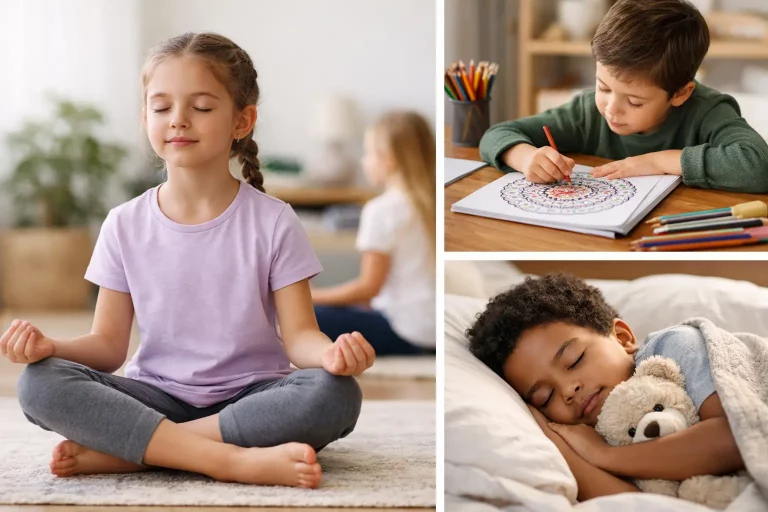
Try practising a soothing technique at a peaceful time, rather than saving it only for a full-blown worry. You might invite your child to place a soft toy on their tummy and watch it rise and fall as they breathe slowly. Younger children often enjoy pretending to smell a flower, then gently blow a feather away. Older children may prefer counting a slow breath in and an even slower breath out.
The aim is not to make every anxious feeling disappear at once. It is to help your child notice, “My body is worried, and I know something that can help me feel steadier.” That is a powerful shift. It gives them a sense of choice at a time when their feelings can seem very large.
A warm bath, a cuddle, a familiar blanket, gentle stretching or a few minutes outside can also support regulation. What works depends on the child. Some become calmer with quiet; others need to move, shake out their hands or kick a ball before they can settle. Notice what leaves your child looking softer, slower and more connected afterwards.
Create a predictable calming routine
An anxious mind often looks ahead for what might go wrong. Predictable routines offer a reassuring answer: this is what happens next, and you are not facing it alone.
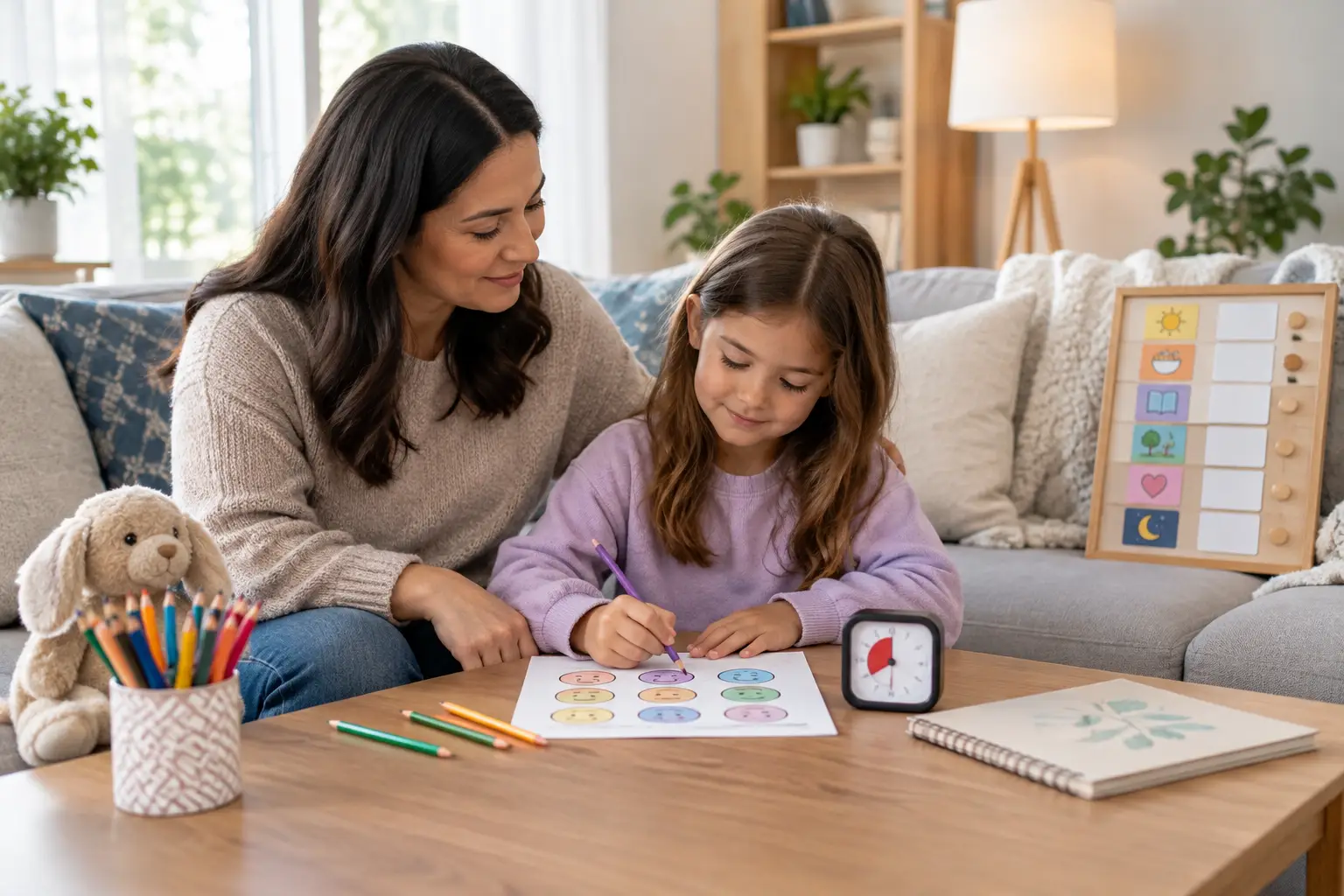
Bedtime is an especially useful place to begin. Rather than rushing from screens or homework straight into sleep, allow a small buffer of calm. This could be a story, a warm drink, a chat about one good thing and one difficult thing from the day, followed by a guided relaxation audio. Repeating the same sequence helps signal safety to the nervous system.
Therapeutic stories can be particularly gentle for children who find direct conversations too intense. When a character meets worries, discovers courage or learns a way to settle big feelings, a child can explore their own experience from a comfortable distance. Companion calming audio can reinforce this at bedtime or after a challenging day, giving children familiar words and sounds to return to when they need reassurance.
Consistency matters more than length. Ten calm minutes most evenings will usually offer more support than an ambitious routine that is difficult to maintain. If family life is busy, choose one small ritual that feels realistic and protect it where you can.
Avoid trying to remove every challenge
It is natural to want to rescue a child from anything that makes them anxious. Yet avoiding every feared situation can unintentionally teach their brain that the situation truly was too dangerous to face. The kinder path is usually gentle, supported practice in small steps.
If your child is worried about school, the first step may be laying out clothes together, walking past the school gates at a quiet time, or agreeing on a simple goodbye routine. If they fear sleeping alone, it may mean sitting nearby for a few minutes and gradually reducing your presence as they feel more secure. The right pace is individual. Pushing too quickly can increase distress, while staying stuck in avoidance can make the worry grow.
Praise effort rather than bravery as a performance. You might say, “You felt nervous and you still took that small step,” or, “You listened to what your body needed and tried your breathing.” This teaches children that courage is not the absence of fear. It is learning that they can carry a feeling and still move forward.
Be careful with the messages anxiety hears
Children learn from the emotional atmosphere around them. This does not mean parents must be perfectly calm at all times. It means that your steady presence, even when you are tired or concerned, can become an anchor.
Try to avoid long debates with the worry. If your child repeatedly asks whether something bad will happen, answer kindly and briefly, then return to a coping tool: “I can see you need reassurance. We have talked about the plan, and now let’s help your body feel safe.” This is not dismissive. It gently moves the focus from chasing certainty to building confidence.
It can also help to use language that separates your child from the anxiety. Instead of “You are anxious”, try “It sounds as though a worry is visiting today.” For some children, giving the worry a silly name or drawing it can make it feel less powerful. For others, this may feel unhelpful or childish, particularly as they get older. A teenager may respond better to a private journal, calming audio or a straightforward conversation without pressure.
When worries are linked to school and change
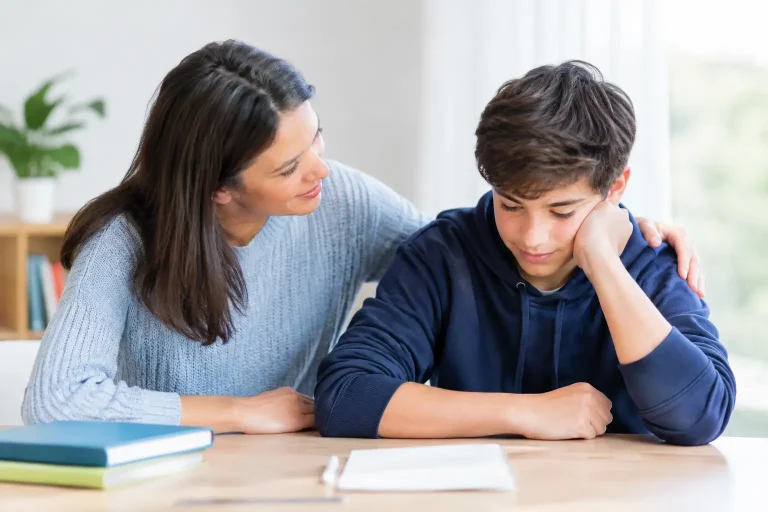
Exams, friendship difficulties, a move, family changes and disappointment over grades can all stir up anxious feelings. Children and young people may need to grieve the outcome they hoped for before they are ready to hear practical advice. Start with compassion: “You worked hard and this hurts.” Then, when the moment is right, help them look at the next small step.
Keep a distinction between the event and their worth. A poor test result, an awkward social moment or a difficult night’s sleep does not define who they are or what their future holds. Repeating this message calmly over time can be far more meaningful than one grand pep talk.
Know when to seek extra support
Home-based support can be deeply comforting, but you do not have to carry everything alone. Speak with your GP, your child’s school or a qualified mental health professional if anxiety is persistent, worsening or getting in the way of sleep, eating, school attendance, friendships or family life. Seek urgent professional help if your child talks about harming themselves, seems unable to stay safe, or is in immediate danger.
Asking for support is not a failure of the routines you have tried. It is another caring step, and early support can make a real difference.
Your child does not need to become fearless to feel better. They need repeated experiences of being heard, soothed and gently supported as they discover that big feelings can pass. Each small moment of calm is a reminder that, even when worries arrive, they have a safe place to begin again.