
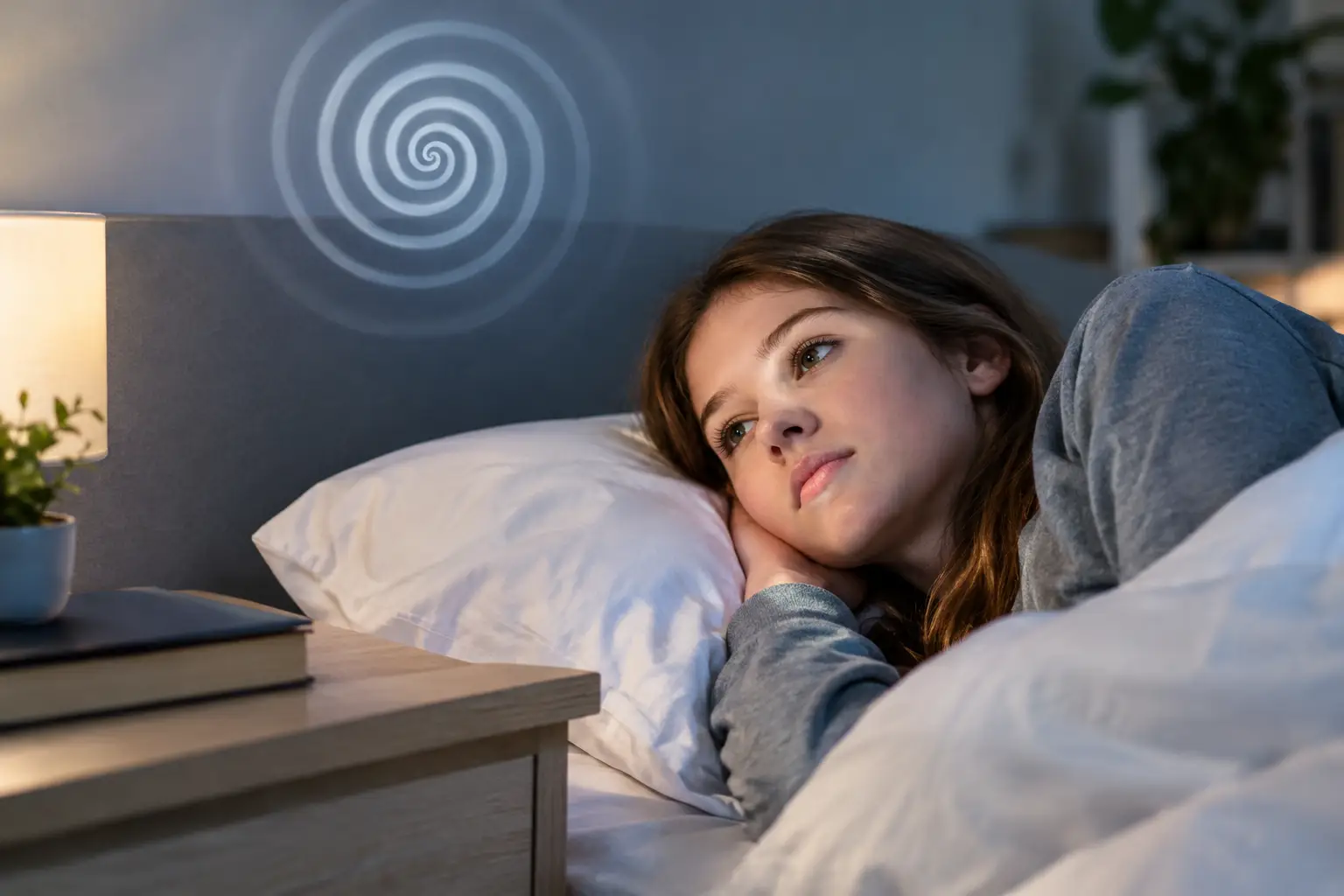
Does Hypnosis Help Teenage Insomnia at Night?
A teenager who is exhausted but cannot switch off is not being difficult or lazy. They may lie awake replaying a conversation, worrying about school, or feeling wide awake long after the rest of the house has settled. So, does hypnosis help teenage insomnia? For some young people, gentle, consent-led hypnosis can be a useful part of a calmer bedtime routine, particularly when worry and physical tension are keeping sleep at arm’s length. It is not a guaranteed cure, and it should never replace medical support where that is needed, but it can offer a reassuring way to practise settling the mind and body.
Does hypnosis help teenage insomnia?
Hypnosis for sleep is usually much quieter and simpler than people imagine. It is not about losing control, being made to do anything, or being put into a deep sleep by somebody else. In a safe therapeutic setting, or through an age-appropriate guided audio, it is a state of focused relaxation. The young person listens to calming suggestions, often alongside slow breathing, soothing imagery and body relaxation.
For a teenager whose thoughts race at bedtime, this can create a helpful pause. Rather than arguing with every worry or trying desperately to force sleep, they learn to notice their thoughts, let their muscles soften and bring their attention back to something steady. A familiar voice, repeated phrases and a predictable routine can all signal to the nervous system that the day is ending.
The evidence specifically on hypnosis for teenage insomnia is still limited. Research into hypnosis and sleep in adults, and into hypnosis for pain, anxiety and stress in children and young people, suggests it may help some people relax and improve sleep-related symptoms. But results vary, studies are often small, and hypnosis is not considered the first-line treatment for persistent insomnia. It works best viewed as a supportive tool, not a promise of instant sleep.
For many teenagers, the bigger benefit is not that hypnosis makes them sleep on command. It can help them feel less frightened of being awake. That shift matters. When bedtime stops feeling like a nightly test they are failing, sleep can become easier to approach.
Why sleep can become difficult in the teenage years
Teenage sleep has its own rhythm. During puberty, many young people naturally become sleepy later in the evening and find early mornings harder. School start times, homework, social lives and bright screens can then pull against that biological shift. A teen may be genuinely tired, yet not ready for sleep at the hour their family hopes for.
Emotional pressures often add another layer. Friendship difficulties, exam worries, changes at home, low confidence and big feelings can all appear louder at night, when daytime distractions fall away. Some young people also start to worry about sleep itself: “If I do not sleep now, tomorrow will be awful.” That fear can create the alertness they are trying to escape.
This is where a gentle guided practice can be useful. It gives the mind somewhere kind to go, instead of asking a young person simply to “stop thinking”. A therapeutic story or audio can offer a safe mental picture, while suggestions around comfort, letting go and inner calm provide language they can gradually make their own.
What a helpful bedtime hypnosis practice looks like
The right approach should feel respectful, not childish or controlling. Teenagers are more likely to use an audio when they have a say in it. Invite them to listen to a short sample or choose whether they would prefer a calm story, a body-scan style practice or simple relaxation with gentle music.
Timing is more important than perfection. A ten to fifteen minute recording, played after teeth are brushed and the mobile phone is placed away from the bed, can become a bridge between a busy evening and sleep. It should be listened to lying comfortably in bed or somewhere quiet, without the pressure to “do it correctly”. If they drift off, that is fine. If they remain awake but feel softer and calmer, that is still worthwhile.
A few details protect the calming effect. Keep the room comfortably dark and cool, and use the audio at a low volume. Avoid choosing a recording that is dramatic, overly stimulating or full of promises that it will make them sleep immediately. Gentle, realistic wording is more reassuring: there is nothing to achieve; they can rest; the body knows how to settle in its own time.
Regularity gives this practice its strength. One listening session after a difficult day may bring relief, but a familiar routine over several weeks is more likely to help untangle the association between bed and worry. This is one reason story-based support and companion audio can work well together. The story helps a young person feel understood, while the audio offers a repeatable moment of calm when they need it most.
Hypnosis works best alongside practical sleep support
When sleep has been poor, it is tempting to search for one perfect solution. In reality, teenagers usually benefit from several small, manageable changes that reduce stimulation and rebuild a sense of safety around bedtime.
Start with a consistent wake-up time most days, including weekends where possible. This can be more helpful than trying to enforce an unrealistically early bedtime. Encourage daylight and some movement during the day, then make the final hour before bed quieter. Homework and mobile phones are not always easy to move, especially for older teens, so aim for a workable boundary rather than a battle. Even twenty minutes without scrolling before a guided relaxation can make a difference.
It can also help to make space for worries before bed. A notebook beside the bed lets a young person write down what is circling in their mind and one small action they can take tomorrow. The aim is not to solve every problem at 10 pm. It is to reassure the brain that the worry has been noticed and does not need to stay on watch all night.
Parents and carers can support without becoming the sleep police. A calm check-in such as, “Would you like your audio tonight, or would you rather read first?” preserves their sense of choice. Try to keep conversations about difficult subjects out of the final minutes before lights out where possible. Your steady presence, and your confidence that this rough patch can improve, can be deeply regulating.
When hypnosis may not be enough
Insomnia can sometimes point to a problem that needs proper assessment. Speak to your GP or another qualified health professional if sleep difficulties last for several weeks, are seriously affecting mood, school attendance or daily functioning, or if your teenager is relying on alcohol, medication or other substances to sleep.
Seek advice sooner if they snore loudly, gasp or seem to stop breathing in sleep, have unusual movements at night, experience severe daytime sleepiness, or show signs of depression, self-harm or overwhelming anxiety. A young person who is hearing or seeing things others do not, feels detached from reality, or has a history of trauma-related dissociation should use hypnosis only with guidance from an appropriately qualified clinician.
For ongoing insomnia, cognitive behavioural therapy for insomnia, often called CBT-I, has the strongest evidence base. A clinician may also look at anxiety, low mood, ADHD, medication, pain, iron levels or a delayed sleep phase. Hypnosis can sit alongside this support, but it should not delay it.
Choosing a safe approach for your teen
Look for material designed for young people, with gentle language and no frightening imagery. It should make clear that your teenager remains aware, can stop listening whenever they wish and does not have to disclose private thoughts. Consent matters, even within a loving family. A reluctant teen is unlikely to find the experience calming.
Be cautious of anyone who claims hypnosis can cure every sleep problem, recover hidden memories, or work without your child’s willing participation. A responsible practitioner will be open about their training, welcome parental questions and recognise when a referral is the kinder next step.
At Peter Bates Holistic Books, the focus is on purposeful stories and calming companion audio that families can return to at home, helping young people meet bedtime worries with reassurance rather than pressure.
A peaceful night may not arrive all at once. Yet each gentle, repeated moment of relaxation can show a teenager that their busy mind is not in charge of every bedtime. With patience, choice and the right support, rest can begin to feel possible again.