Self Soothing Tools for Kids That Build Calm
A child may be laughing at breakfast and in tears before school, unable to explain why. They may be perfectly tired at bedtime, yet suddenly wide awake with worries. Self soothing tools for kids offer something simple in these moments: a safe, familiar way to pause, feel supported and begin to find their inner calm.
These tools are not about asking a child to hide their feelings or calm down on demand. Big feelings need kindness before they need solutions. The aim is to help a child notice what is happening inside, feel less alone with it, and gradually learn that difficult moments can pass.
What self-soothing really means for children
Self-soothing is the ability to bring some comfort to yourself when you feel worried, cross, overwhelmed, disappointed or unsettled. For young children, it begins with co-regulation. They borrow calm from a trusted adult through a gentle voice, a cuddle, predictable words or simply someone staying close.
Over time, small repeated experiences help a child develop their own calming habits. This may look like holding a soft object, listening to a familiar story, taking slow breaths with a parent, drawing a worry, or settling beneath a cosy blanket. The tool itself matters less than the message it gives: you are safe, your feelings are allowed, and there is a way through this.
It is worth keeping expectations realistic. Self-soothing does not mean a child will never shout, cry or struggle. Nor should it become a demand placed on a distressed child. A child in the middle of a meltdown may need connection and space first. The tools work best when they are introduced during calm moments, so they feel known and reassuring when feelings become too big.
Choosing self soothing tools for kids
The most helpful tool is one that suits your child rather than the one that looks best on paper. Some children settle through movement and touch. Others need quiet, stories or gentle sounds. A child who finds noise overwhelming may not enjoy an audio track at first, while a child who resists talking about feelings may open up through a character in a story.
Think about the moments that feel hardest. Bedtime worries call for a different kind of support than frustration after school or nerves before an exam. A small set of familiar choices is usually more comforting than a cupboard full of new activities. Too many options can feel like another demand when a child is already overwhelmed.
Offer the tool warmly, without pressure. You might say, “Your body feels very buzzy. Shall we sit together and listen to something calming?” Giving a simple choice helps children feel some control: “Would you like your soft toy or your breathing card?”
Comfort through the senses
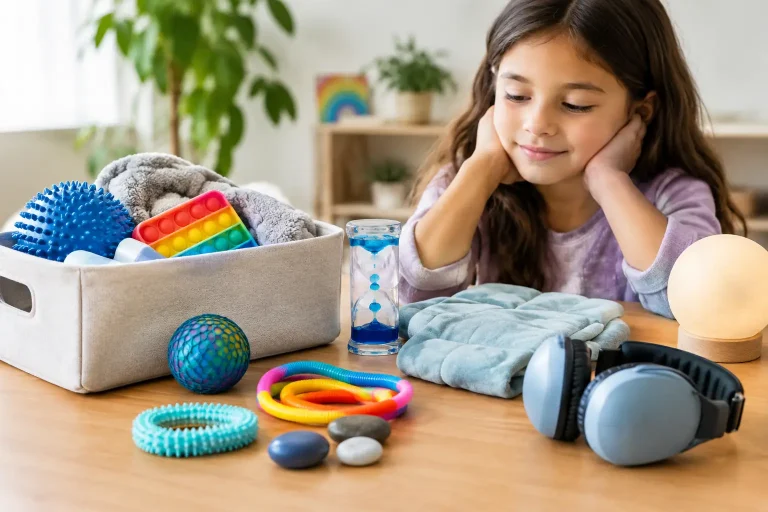
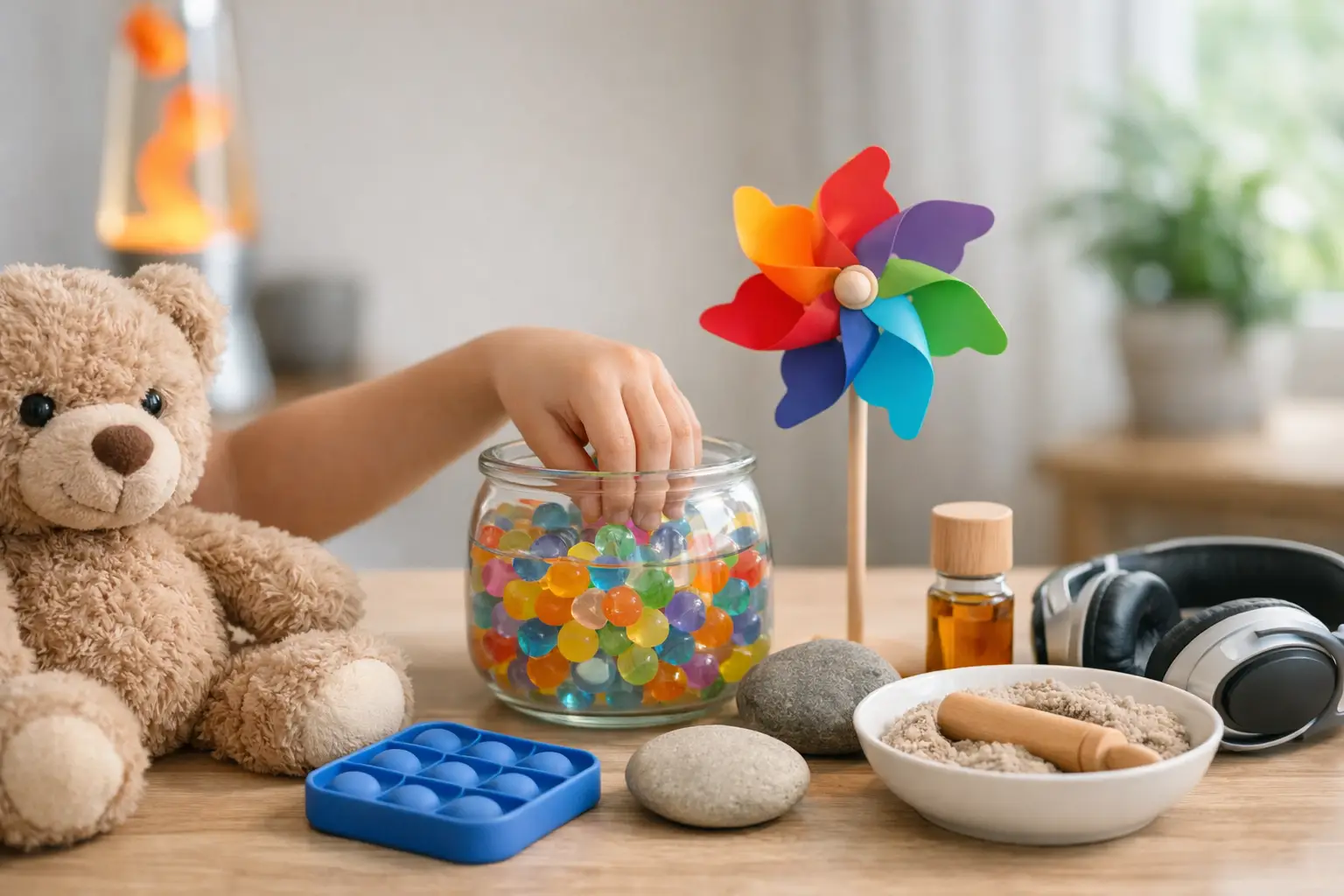
Sensory comfort can help a child return to the present when their thoughts are racing. A favourite soft toy, a smooth pebble kept in a pocket, a warm wheat bag used safely with supervision, or a familiar blanket can provide a quiet physical anchor.
Slow movement can be equally helpful. Some children need to stretch like a cat, stamp their feet, shake out their hands, or walk slowly around the garden before they can settle. This is not avoiding the feeling. It is helping the nervous system release some of the energy that comes with it.
Keep sensory tools personal and simple. A scent that one child finds soothing may be too strong for another, and weighted items are not suitable for every child. Watch their response rather than assuming a popular tool will work.
Breathing without making it a test
Breathing exercises can be gentle and playful, particularly for younger children. Try smelling an imaginary flower, then slowly blowing a bubble. You can trace a finger up and down the five points of a star, breathing in on the way up and out on the way down.
The key is not perfect breathing. If a child becomes frustrated by instructions, stop and return to a simpler form of comfort. Sitting close together and letting them hear your own slower breath can be more powerful than asking them to copy a technique.
Stories and calming audio
A therapeutic story gives children a little distance from feelings that can seem too large to name directly. It can show a character facing worry, disappointment or bedtime fear, then finding support and a gentler way forward. Children often absorb reassurance more easily through story than through a direct conversation, especially when they are tired or defensive.
Calming audio can add another layer of support. Guided relaxation, meditation and age-appropriate hypnotic language can help slow a busy mind and create a peaceful transition before sleep. Used regularly, an audio track becomes a familiar cue: it is time to rest, let go of the day and feel safe.
At Peter Bates Holistic Books, therapeutic storytelling and companion audio are created to work together in this way, offering families a repeatable, home-based source of reassurance for particular worries. It is still wise to let your child lead. Some will want the same story every night, while others prefer a short listening session or a quiet cuddle after the first few minutes.
Build a calming routine before the difficult moment
Tools become more effective when they belong to a predictable rhythm. A bedtime routine might include a drink of water, pyjamas, a short chat about the day, a calming story or audio, and a few quiet moments together. The order does not need to be elaborate. Consistency is what makes it feel secure.
After school, a child may benefit from a decompression ritual before questions about homework or their day. A snack, ten minutes of free play, colouring, music or time outdoors can create a gentle bridge between the demands of school and home.
For older children facing revision pressure, encourage a pause between study sessions. They may choose to listen to a calming track, write down the next small task, or place both feet on the floor and notice five things around them. These are not ways to make pressure disappear. They are ways to untangle the worries enough to think clearly again.
Words that help a child feel safe
The language around a calming tool matters. “You are fine” can feel dismissive when a child clearly does not feel fine. Instead, name what you notice with warmth: “This feels really hard right now,” or “I can see your worry has grown very loud.”
Then offer reassurance without making promises you cannot keep. “We can take this one step at a time” and “I am here with you” are steadier than insisting that nothing will go wrong. If a child is disappointed by an exam result, excluded by friends or frightened at night, they need room for the feeling as well as encouragement.
You can also help them build their own calming phrases. It might be, “This feeling will move,” “I can ask for help,” or “I do not have to solve everything tonight.” The phrase should sound believable to the child, not borrowed from an adult script.
When a tool is not enough on its own
Home-based calming tools are a valuable first layer of support, but they are not a replacement for professional help when distress is persistent or severe. Speak to your GP, school pastoral team or an appropriately qualified mental health professional if anxiety is regularly stopping your child from sleeping, attending school, eating, enjoying life or spending time with others.
Seek urgent support if a child talks about hurting themselves, seems unsafe, or you are deeply concerned about their wellbeing. Asking for help is not a failure of parenting. It is another way of showing your child that their feelings matter and that support is available.
A calm routine will not make every hard moment disappear. What it can do is give your child a familiar place to return to, again and again, until comfort begins to feel like something they can carry within themselves.