Hypnosis Audio for Children’s Sleep: Does It Help?
Bedtime can feel longest when a child is tired but cannot quite let go. You have done the bath, the story, the cuddles, the lights low, and still their mind is busy. In that space, hypnosis audio for children’s sleep can offer something many families are quietly looking for – a gentle way to untangle the worries, soften physical tension and help sleep feel safe again.
For parents, the word hypnosis can sound bigger or stranger than it really is. In children’s wellbeing, it is usually much closer to guided relaxation than anything dramatic. A calm voice, soothing imagery and carefully chosen language invite the body to settle and the mind to stop gripping so tightly. Rather than forcing sleep, it helps create the inner conditions that make sleep more likely.
What hypnosis audio for children’s sleep actually does
Children do not usually stay awake because they want to. More often, something inside them is still switched on. It may be worry about school, a fear of being alone, excitement that has not fully worn off, or simply a nervous system that has had a full day and does not know how to power down.
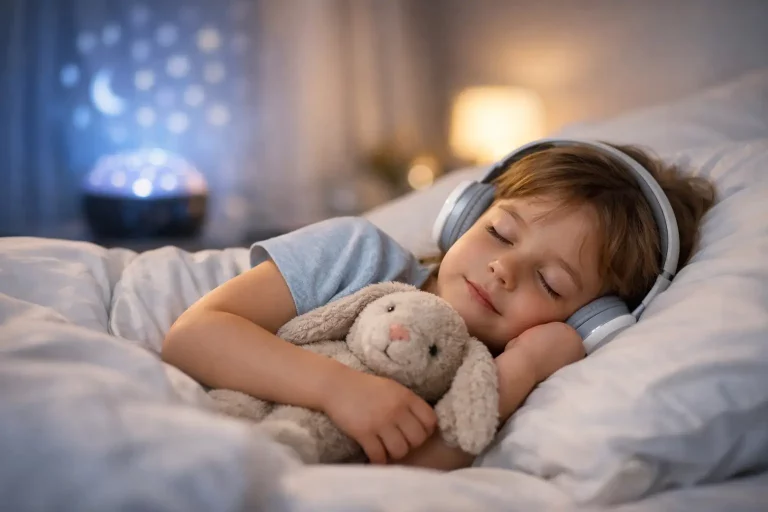
Hypnosis audio for children’s sleep works by gently shifting attention. Instead of listening to anxious thoughts, the child follows a slow, reassuring voice. They may be guided to notice their breathing, imagine a peaceful place, or feel each part of the body becoming soft and heavy. This kind of focus can interrupt the spiral of bedtime thinking and replace it with a calmer rhythm.
There is also a subtle emotional benefit. When a child hears safe, repeated messages at bedtime, they begin to associate sleep with comfort rather than struggle. Over time, that can reduce resistance. Bedtime stops feeling like a battle to be won and becomes more familiar, predictable and secure.
Why some children respond especially well
Children are often naturally receptive to imaginative language. They do not need a lecture on relaxation techniques. They respond to images, stories and gentle suggestion. A child who resists being told to calm down may settle beautifully when invited to imagine floating on a cloud or resting under a blanket of stars.
This is why therapeutic audio can be so effective when it is designed with children in mind. The pacing matters. The wording matters. The emotional tone matters. A voice that feels warm and steady can help a child borrow calm when they cannot yet find it for themselves.
That said, it depends on the child. Some children love audio straight away. Others need a few nights before it feels familiar. Some prefer very soft storytelling, while others settle better with more direct relaxation cues. Age, temperament and the reason behind the sleep difficulty all play a part.
When sleep struggles are really about worry
Many bedtime difficulties are not just sleep problems. They are worry problems that show up at night. During the day, children can stay busy enough to keep uncomfortable feelings in the background. At bedtime, when the house grows quiet, those feelings often rise.
A child might suddenly ask repeated questions, need extra reassurance, complain of tummy aches, or call out again and again after lights out. Sometimes this is labelled as stalling. Sometimes it is. But often it is a child trying to stay close to safety because sleep feels like separation from it.
In these cases, hypnosis audio can help because it does not argue with the worry. It does not tell the child to stop feeling what they feel. Instead, it gives them another experience to move towards. Calm breathing, soft imagery and reassuring phrases can reduce the emotional charge without making the child feel corrected or dismissed.
How to use sleep hypnosis audio without making bedtime feel complicated
The most helpful bedtime tools are the ones families can actually keep using. If audio becomes another task to get exactly right, it can add pressure where you need less of it.
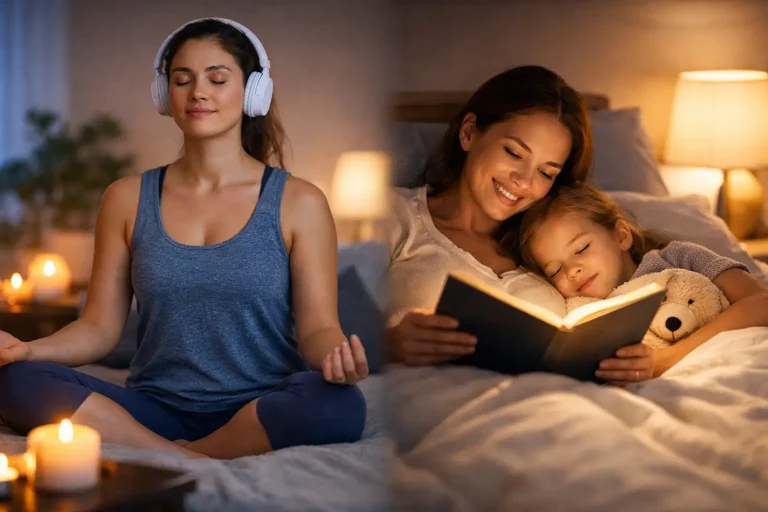
Keep the routine simple. Start the audio once your child is already in bed and the room is calm. Dim lights help. So does consistency. If possible, use the same general order each night so the body begins to recognise what is coming. pyjamas, toothbrushing, a story, then the audio can work well because each step gently signals that the day is ending.
Try not to present the audio as a fix for something wrong with your child. It is better framed as a comforting support. You might say, “This is something gentle to help your body feel sleepy,” or, “Let’s listen to something that helps your mind feel peaceful.” That language matters. It protects emotional safety and reduces the chance of bedtime feeling clinical.
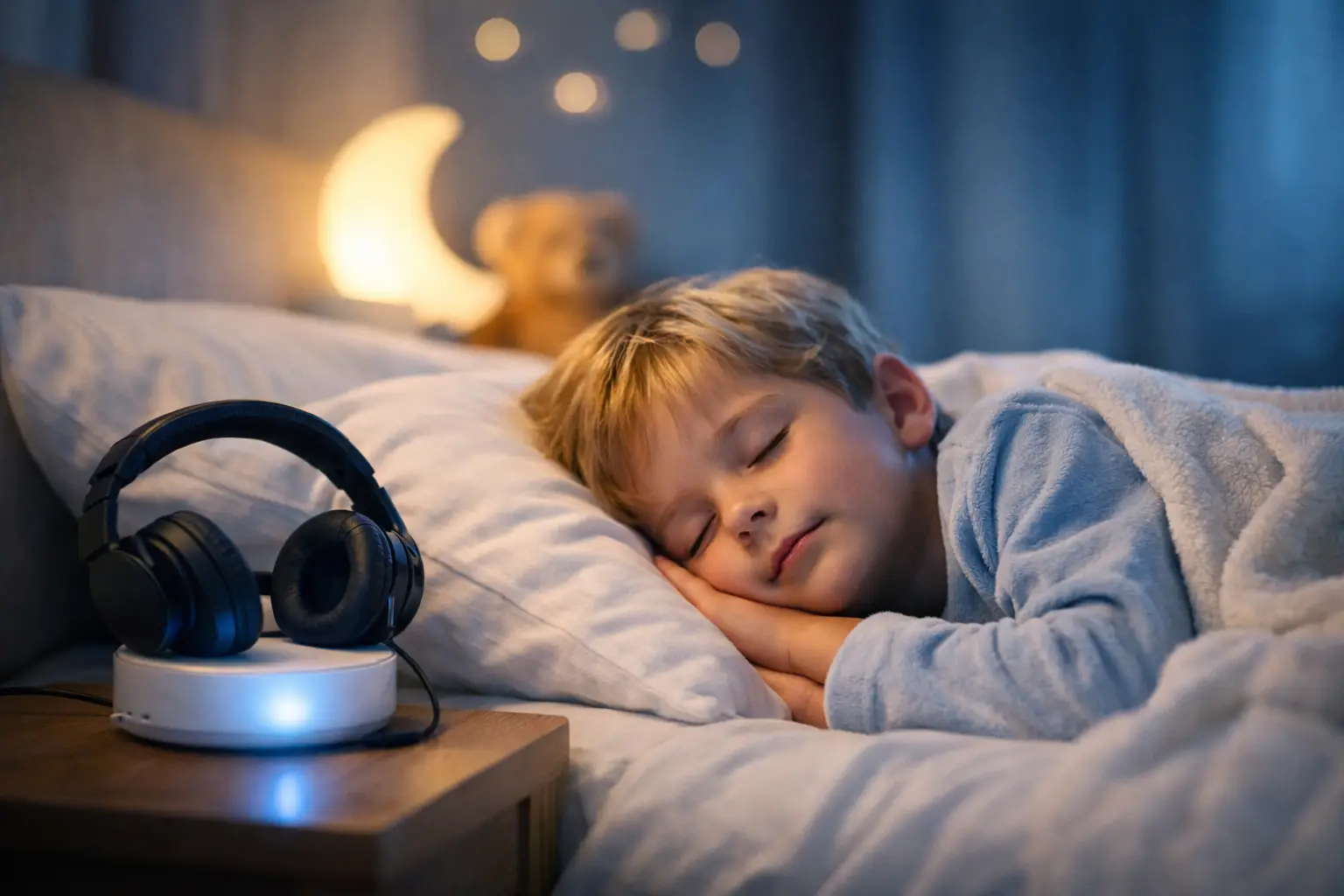
Volume matters too. The voice should be easy to hear but never intrusive. If your child is very sensitive, a shorter audio may work better at first. The goal is not to hold their attention perfectly from beginning to end. The goal is to create a calm bridge into sleep.
What to look for in hypnosis audio for children’s sleep
Not all sleep audio is created with the same care. Some tracks are relaxing in a broad sense but not truly suited to children who are anxious, overtired or emotionally wound up.
Look for language that feels age-appropriate and emotionally safe. The pace should be unhurried. The voice should sound grounded rather than theatrical. Good children’s sleep audio avoids overloading the child with too many instructions and instead offers space, reassurance and repetition.
It also helps if the content understands why sleep may be difficult. A child who fears the dark needs something slightly different from a child whose mind races about school. The strongest therapeutic tools acknowledge those underlying feelings and gently help shift them.
This is where purpose-built resources can make a real difference. At Peter Bates Holistic Books, the most effective support is not created as background noise. It is designed as a practical emotional wellbeing tool that can sit naturally within a family’s evening routine.
What parents should expect in the first week
Sometimes the effect is immediate. A child who has been holding a lot of tension may relax quickly once they feel guided and safe. More often, the change is gradual. Bedtime becomes less jagged. The child settles faster, asks for less reassurance, or seems calmer even before the audio starts.
That gradual shift is still meaningful. You are not only helping your child fall asleep on one particular night. You are helping build a new bedtime pattern. Repetition teaches the nervous system what calm feels like.
If there is no dramatic result after one or two listens, that does not mean it is not working. Children often need familiarity before they fully trust a new experience. Keep noticing the smaller signs. Is your child’s body less tense? Are they calmer during the wind-down? Are bedtime worries easing in intensity? Those changes matter.
A gentle word on boundaries and realistic expectations
Hypnosis audio can be wonderfully supportive, but it is not magic and it is not a substitute for checking in on bigger issues. If a child’s sleep difficulty is linked to persistent anxiety, trauma, sensory challenges or health concerns, extra support may be needed alongside bedtime tools.
It is also worth saying that no audio can replace connection. What helps most is often the combination of a calm adult, a safe routine and a therapeutic resource that reinforces both. Children settle more easily when they feel held emotionally as well as practically.
So if your child still needs you nearby, that is not failure. If sleep improves in stages rather than overnight, that is still progress. The aim is not a perfect bedtime. It is a gentler one.
When chosen carefully, hypnosis audio for children’s sleep can become more than a sleep aid. It can become a reassuring ritual that tells a child, night after night, that their body can soften, their thoughts can quieten and rest is a safe place to go. Sometimes that is exactly what a busy young mind has been waiting to hear.