
Teaching Positive Self-Talk Skills to Children
A child who whispers, “I can’t do this,” before putting pencil to paper is not being difficult or negative. They may be feeling overwhelmed, frightened of getting it wrong, or carrying a worry they do not yet know how to explain. Teaching positive self-talk skills gives children gentle words to reach for in those moments – not to dismiss their feelings, but to help them feel safer within them.
The aim is not to persuade a child that everything is wonderful when it plainly is not. It is to help them replace harsh, frightening thoughts with words that are fair, comforting and useful. Over time, that kinder inner voice can become a steady companion through bedtime worries, playground problems, tests and the many small disappointments that can feel enormous to a young person.
What positive self-talk really means
Positive self-talk is the way we speak to ourselves in our own minds. For children, it is often heard out loud first: “I’m rubbish at this”, “Nobody likes me”, or “I’ll never get to sleep.” These statements can sound final, even when they are really a sign that a child needs reassurance and support.
Helpful self-talk does not demand that a child says, “I’m the best,” when they feel upset or unsure. That can feel unbelievable, particularly for an anxious child. A more believable phrase might be, “This is tricky, but I can have another go,” or, “I feel worried right now, and I can ask for help.”
This distinction matters. Forced cheerfulness can leave children feeling misunderstood. Kind, realistic language helps them acknowledge the big feeling while finding a way through it.
Start by lending your child your calm voice
Children learn the tone of their inner voice from the adults around them. This is not a reason for parents and carers to feel guilty – everyone has difficult days. It is a gentle invitation to let children hear the compassionate language you use when things go wrong.
If you burn dinner, miss a bus or make a mistake at work, try saying something like, “That was frustrating. I’ll take a breath and work out what to do next.” Your child learns that mistakes do not need to become a verdict on who they are.
The same applies when responding to their worries. Instead of quickly saying, “Don’t be silly, you’ll be fine,” pause beside them. You could say, “It sounds as though your tummy feels wobbly about tomorrow. Let’s think of some words that might help your mind feel calmer.” Being heard comes before being coached.
Teaching positive self-talk skills in everyday moments
The most effective practice is usually brief, repeated and woven into ordinary family life. Trying to introduce new phrases in the middle of a full meltdown can be too much. Choose a peaceful moment, perhaps during a walk, at bedtime, or after school, when your child is more able to listen and join in.
Begin with one familiar worry. A child who struggles with reading might say, “I’m too slow.” Help them turn that thought into something both honest and encouraging: “I’m learning at my own pace,” or, “I can read one line at a time.” If school mornings feel rushed and tense, “I can’t cope” may become, “I only need to do the next thing.”
Keep the language close to your child’s age and natural way of speaking. A four-year-old may connect with, “I can be brave with Mum nearby.” An older child might prefer, “I’ve handled hard days before,” or, “One test does not decide my future.” The phrase must feel like it could genuinely belong to them.
Name the thought, then soften it
A simple way to teach this is to separate the child from the thought. Rather than treating “I’ll fail” as a fact, describe it as a worry thought: “Your worried mind is telling you that you’ll fail.” This creates a little breathing space.
Then offer a softer, more balanced response. For example: “I’m worried I’ll make a mistake” can become, “Mistakes help me learn, and I can take my time.” “Nobody will play with me” can become, “I feel left out today. I can talk to someone I trust.”
There is no need to correct every negative comment. Constantly challenging a child’s words can feel exhausting for both of you. Focus on the patterns that are affecting their confidence, sleep or willingness to try.
Give the words a physical anchor
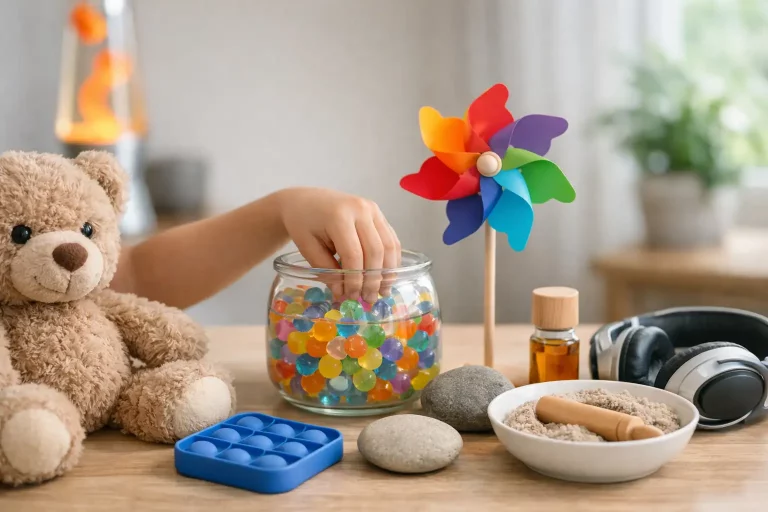
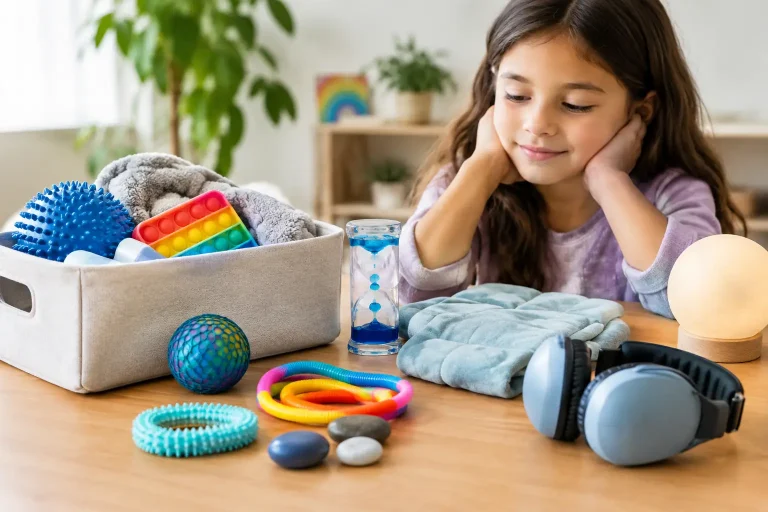
Children often remember self-talk more easily when it is paired with something soothing for the body. Invite them to put a hand on their chest, squeeze a cushion, hold a favourite soft toy, or breathe out slowly while repeating one short phrase.
At bedtime, a child might breathe in gently and say, “My body can rest,” then breathe out and say, “I am safe in my bed.” Before an exam or performance, they might place both feet on the floor and quietly repeat, “I can take this one question at a time.”
This is not magic, and it will not erase every worry. It gives the nervous system a reassuring routine: a familiar action, a calmer breath and a kinder message arriving together.
Useful phrases for common big feelings
It helps to have a small family collection of phrases ready before they are needed. Write them on a note by the bed, make a colourful card together, or practise them during a calm car journey. Four types of phrase are especially useful:
- For worry: “I can take one small step.”
- For mistakes: “I am still learning.”
- For bedtime: “My thoughts can slow down now.”
- For disappointment: “This hurts, and I will feel better again.”
For a child facing exam stress, it may help to focus on effort rather than a perfect outcome: “I can prepare what I can, then do my best.” For a young person disappointed by grades, a compassionate phrase might be, “These results matter to me, but they are not the whole of me.” Such words do not minimise disappointment. They make room for it without allowing it to define the future.
Use stories to make difficult feelings less frightening
Some children find it much easier to talk about a character’s worries than their own. A story can show them that nervous thoughts, jealousy, anger or fear are feelings that come and go, rather than signs that something is wrong with them.
After reading, ask gentle questions: “What do you think the character said to themselves when they felt scared?” or “What kind words could they have used?” There is no need to turn every story into a lesson. Let the conversation stay light, and allow your child to offer a silly answer, a thoughtful one, or none at all.
A calming audio routine can support this approach too. When a child repeatedly hears peaceful imagery and reassuring language at the same point in their evening, the words can become familiar pathways towards inner calm. At Peter Bates Holistic Books, therapeutic stories and companion audio are designed to offer families this sort of repeatable, emotionally safe support at home.
When positive words are not enough
Self-talk is a valuable skill, but it is not a substitute for listening carefully to what a child is experiencing. If your child is persistently unable to sleep, avoids school, has frequent panic, seems deeply low, or their anxiety is limiting everyday life, speak with your GP, school pastoral team or an appropriate mental health professional.
In the moment, they may not need a phrase at all. They may need a cuddle, quiet company, a drink of water or time to cry. Emotional safety comes first. The words can follow when their body and mind feel more settled.
A kinder inner voice is built slowly, through hundreds of ordinary moments in which a child learns: I can have difficult feelings, I can be supported, and I do not have to speak to myself unkindly to get through them. Each small phrase you practise together is a gentle thread, helping them untangle the worries and carry more calm into the next day.