A Guide to Exam Calm Tools for Young Minds
The night before an exam can make even a usually cheerful child seem unlike themselves. They may be snappy at tea, unable to settle at bedtime, or suddenly convinced they will forget everything they have revised. A guide to exam calm tools is not about persuading a young person that exams do not matter. It is about giving their mind and body a safer place to land, so worry does not take over the whole experience.
Exam nerves are a very human response to something that feels important. A little nervous energy can help a child focus. The difficulty comes when big feelings become so loud that sleep, concentration, appetite or confidence are affected. Gentle, repeatable calming tools can help untangle those worries before they grow heavier.
Begin with calm, not more pressure
When a child is worried about exams, adults often jump straight to revision plans, practice papers and reminders. Organisation can be helpful, but it rarely settles a nervous system that is already on high alert. Before asking, “What do you still need to revise?”, try noticing what is happening underneath.
You might say, “It sounds as though your mind is carrying a lot right now,” or, “You do not have to sort every worry this minute.” These simple words offer reassurance without dismissing the feeling. Avoid promises such as “You will definitely be fine” if your child is frightened. They may not believe it. Instead, let them know that they can feel worried and still be supported.
A useful first step is to create a short transition after school or revision. Ten quiet minutes with a drink, a snack and no questions about work can make a real difference. It gives the body time to move out of the busy school day before another task begins.
The most helpful exam calm tools work through routine
Calm is easier to access when it is familiar. Rather than saving every wellbeing idea for the evening before a test, choose one or two tools that can become part of the week. A child who has practised settling their breathing at bedtime is more likely to remember it when they sit down in the exam hall.
A steady breathing pattern
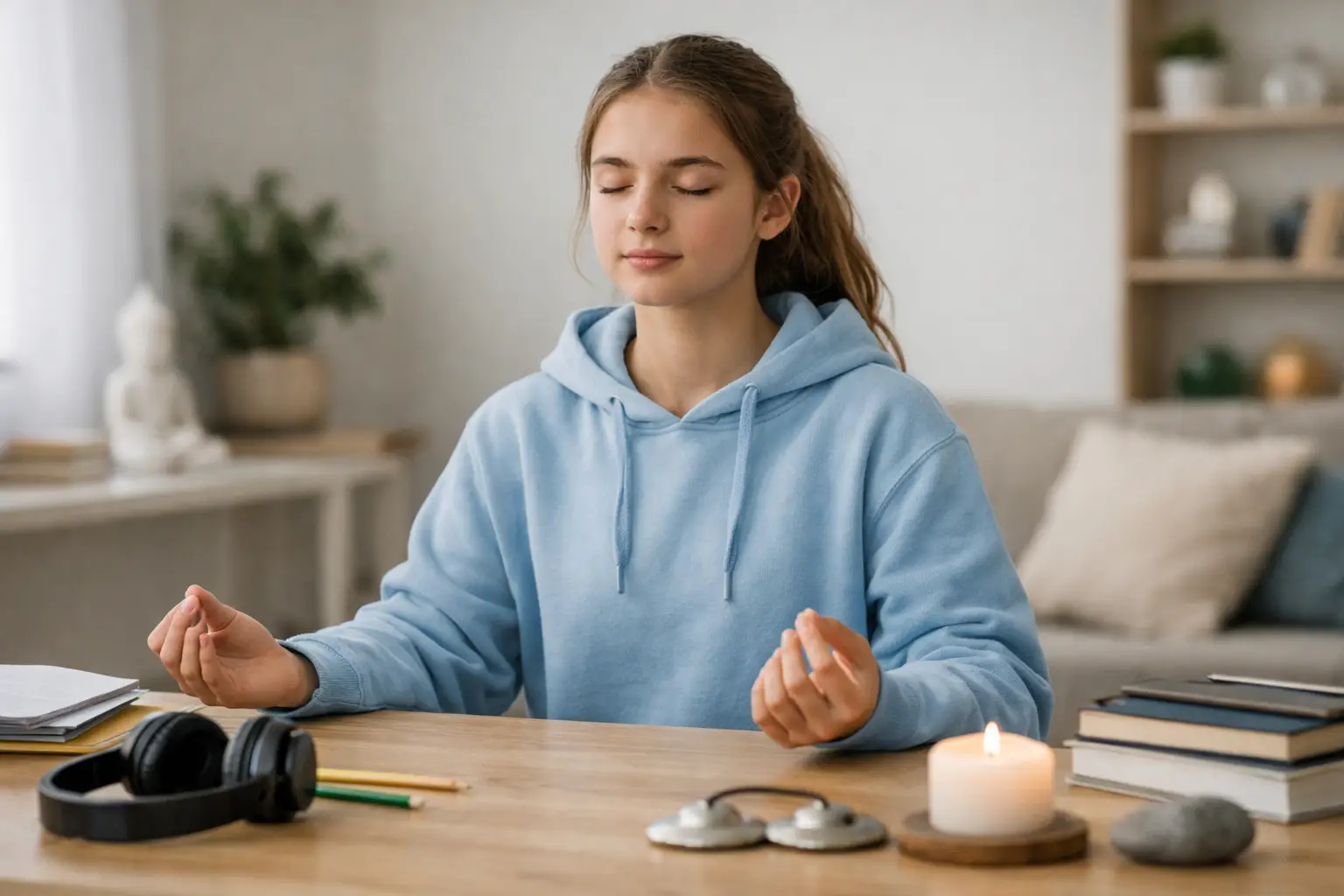
Slow breathing sends a quiet signal of safety to the body. Keep it uncomplicated: breathe in gently through the nose for a count of three, then breathe out slowly for a count of four or five. The longer out-breath matters more than counting perfectly.
For younger children, make it visual. They can imagine smelling a favourite flower, then slowly cooling a spoonful of hot soup. For older children and teens, it may help to explain that they are not trying to force anxiety away. They are simply giving their body a chance to soften.
Practise for a minute before revision starts, after a break and at bedtime. If counting becomes another thing to get right, let it go. A soft, unhurried out-breath is enough.
A worry container
Exam worries often arrive at the most unhelpful times, particularly when the lights go out. Giving worries a place to go can stop them circling endlessly in a child’s thoughts. Keep a notebook or small box nearby and invite them to write, draw or dictate what is bothering them.
Then help them sort the worry into one of two groups: something we can take a small action on, or something we cannot solve tonight. A concern about not understanding fractions may lead to a plan to ask the teacher for help. A fear of disappointing everyone needs comfort, perspective and rest, not another worksheet.
You do not need to analyse every note. The purpose is to let the worry leave their head for a while. A simple phrase such as, “We have heard that worry. We can return to it tomorrow,” can be surprisingly settling.
Therapeutic stories and calming audio
Some children find direct conversations about anxiety uncomfortable, especially if they cannot explain why they feel upset. A thoughtfully created story can give them a little emotional distance. They may recognise their own experience in a character who faces a challenge, discovers inner resources or learns that difficult feelings can pass.
Companion calming audio can be especially useful at bedtime or before a revision session. Gentle guided relaxation, meditation and age-appropriate hypnotic language can help a child slow down, imagine a safe inner space and replace racing thoughts with calmer ones. The aim is not to make them passive or to erase every feeling. It is to help their mind rehearse a more settled response.
At Peter Bates Holistic Books, this combination of therapeutic storytelling and guided audio is designed to fit naturally into home routines, offering children supportive words they can return to when exam pressure feels too much.
Make revision feel more manageable
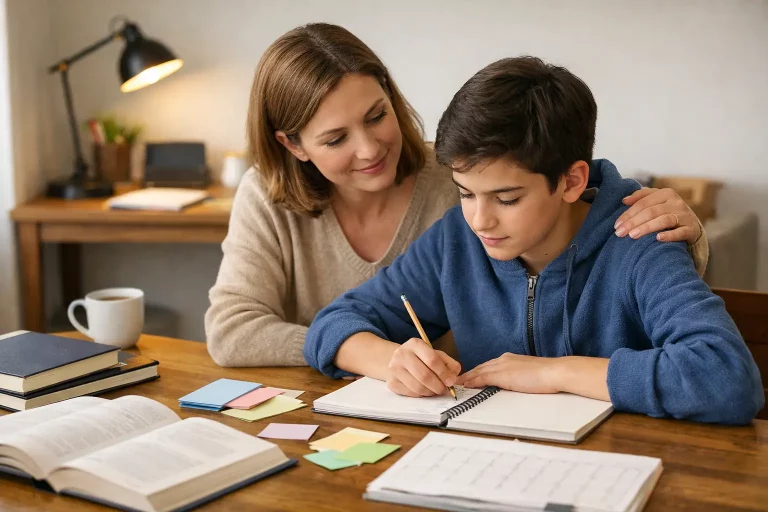
A calm tool works best alongside a realistic approach to learning. Long, tense revision sessions can leave a child feeling that they are failing before they have begun. Shorter periods of focused work, followed by genuine breaks, are usually kinder and more productive.
Help your child choose one small task at a time. “Let’s look at five spellings” feels possible. “You need to revise English” can feel enormous. When they finish, acknowledge the effort rather than only the result: “You stayed with that even though it felt tricky.” This helps build confidence that is not tied solely to marks.
It also helps to be honest about limits. No one can revise every detail, and no child needs to be perfect to do well. Rest, meals, movement and enjoyable moments are not rewards to be earned once work is complete. They are part of helping the brain learn and remember.
Protect the bedtime window
Sleep worries and exam worries often feed each other. A tired child is more likely to feel tearful, overwhelmed or unable to think clearly. Yet telling a child they “must get to sleep” can make bedtime feel like another test.
Keep the last hour before bed quieter where possible. Reduce bright screens, avoid last-minute quizzes and let school bags be packed before the final wind-down. A warm bath, a familiar story, calming audio or gentle breathing can become cues that the day is ending.
If your child wants to talk, listen without turning the conversation into a planning meeting. Offer one practical reassurance, such as laying out their uniform or checking the morning timetable, then return to comfort. Their mind needs permission to stop preparing.
A child who cannot sleep does not need a lecture about the consequences. Remind them that resting quietly still helps the body. Often, the pressure eases when sleep is no longer treated as something they must achieve immediately.
What to say on exam morning
The morning of an exam is not the time for a big pep talk. Keep your voice low, your instructions simple and the atmosphere as ordinary as possible. Offer breakfast, water and enough time to leave without rushing, but do not insist on a perfect routine. Some children eat less when anxious, and a small familiar snack may be all they can manage.
Try phrases that anchor them in the next small step: “You only need to get through the first question,” or, “If your mind goes blank, pause and take one slow breath.” Remind them that an exam measures what they can show on one day. It does not measure their kindness, imagination, effort or worth.
For some young people, a discreet object in a pocket can be reassuring: a smooth stone, a small note with a calming phrase, or a familiar keyring. Check school rules first, and make sure it is not something that could distract them. The object is simply a quiet reminder of safety and support.
When nerves need extra support
Exam stress should not be faced alone when it is intense or ongoing. Speak with your child’s teacher or school pastoral lead if anxiety is leading to regular tears, panic, school avoidance, persistent sleep difficulties or a marked change in mood. Schools may be able to offer a quieter room, rest breaks, check-ins or other appropriate support, depending on the child’s needs.
If your child talks about harming themselves, seems hopeless, or their anxiety is seriously affecting daily life, seek prompt support from a GP or an appropriate mental health professional. Home-based calm tools can be deeply comforting, but they are not a replacement for professional care when a child is struggling to cope.
The kindest message a child can carry into exam season is this: they do not have to prove their value on a piece of paper. With patient routines, a few trusted calming tools and an adult who keeps believing in them, they can meet the day with a little more inner calm.