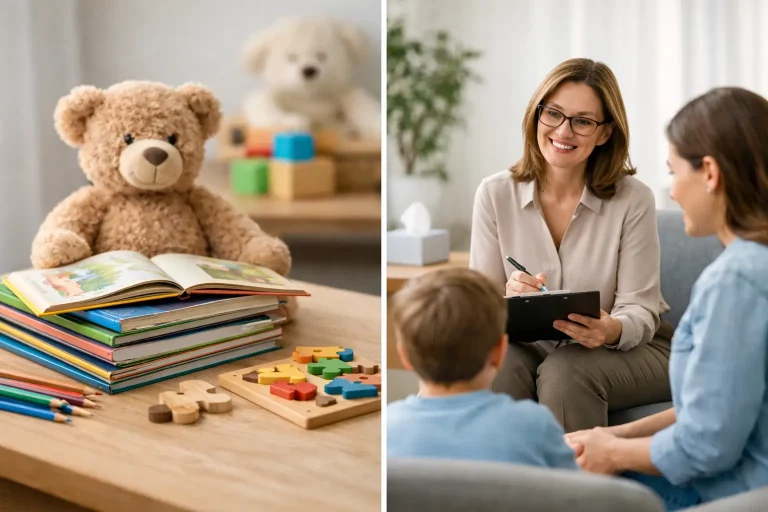

A School Transition Anxiety Guide for Parents
The night before a new term can make even a usually confident child seem smaller. They may ask the same question repeatedly, become tearful over a misplaced sock, complain of a tummy ache, or insist that they cannot go. This school transition anxiety guide offers gentle ways to untangle those worries, so your child feels held, heard and more able to take the next small step.
A transition can mean starting Reception, moving to junior or secondary school, returning after a holiday, changing class, or joining a new school partway through the year. Adults can see the practical details – a new uniform, route or timetable. For a child, it can feel like the ground beneath familiar routines has shifted. New faces, unfamiliar expectations and separation from home can all awaken big feelings.
Why school changes can feel so big
Anxiety is the body and mind trying to protect us from what feels uncertain. It is not a sign that your child is being difficult, attention-seeking or incapable of coping. They may not have the words for, “I am worried I will get lost,” or, “What if nobody sits with me at lunch?” Instead, the worry often arrives through behaviour, sleep difficulties, irritability or physical discomfort.
Some children are reassured by information. Others become more overwhelmed when given too many details at once. It depends on their age, temperament and previous experiences. A child who has had a difficult friendship year, struggled with learning, or found separation hard in the past may need more preparation and reassurance than a sibling who appears to take change in their stride.
Try to see what is underneath the protest. “I do not want to go” might really mean, “I do not yet feel safe enough to imagine going.” That shift in understanding helps you respond with calm connection rather than pressure.
A school transition anxiety guide begins with listening
Choose a quiet moment, not the rushed school run, and make space for your child to talk. You do not need to solve every worry immediately. Often, feeling understood lowers the intensity of the feeling.
You might say, “Starting a new class can bring lots of thoughts,” or, “It sounds as though your tummy feels wobbly when you think about the playground.” Naming what you notice gives children permission to share without feeling judged. Avoid quick reassurance such as “There is nothing to worry about.” Although lovingly meant, it can leave a child feeling that their fear is too much or wrong.
Instead, pair acceptance with confidence: “It makes sense that this feels new. We will practise it together, and there will be grown-ups at school to help you.” This tells your child that their feelings are welcome, while gently reminding them that they have support.
For younger children, drawing can be easier than talking. Ask them to draw their new classroom, a worry monster, or what they hope their first day might include. Older children may prefer a private notebook where they can write down questions for a teacher or list what would make the first week easier.
Make the unfamiliar more familiar
Anxiety grows in the gaps where imagination has to guess. Filling a few of those gaps can bring real relief. If possible, walk or drive the school route at a quiet time. Point out the gate, where you will say goodbye, and where you will meet again. Practise putting on uniform, opening a lunchbox, using a new travel pass or finding the toilet if a visit is available.
Keep this preparation light. The aim is not to rehearse every possible problem, but to give your child a handful of familiar anchors. A photograph of the teacher, a simple map, or knowing the name of one safe adult can make a large new setting feel more manageable.
If your child is moving to secondary school, look together at the timetable and identify the first lesson, break and journey home. A written plan in their bag may feel more reassuring than trying to hold everything in their head. Where the school allows it, arranging to arrive with a familiar friend can also soften the first few mornings.
Create calm before the first bell
The days before a transition do not need to be filled with school talk. In fact, constant checking can make worries louder. Build small moments of calm into ordinary family life: a familiar bedtime story, a warm bath, gentle breathing, time outdoors, or a quiet audio designed to help children settle their busy thoughts.
Therapeutic storytelling can be especially helpful at bedtime, when daytime distractions fall away and worries often gather pace. A comforting story gives children a safe distance from their feelings. They can recognise a character’s uncertainty, imagine a calmer response, and begin to feel that they are not alone. Guided relaxation audio can reinforce this sense of inner calm through repetition, making it a gentle part of an evening routine rather than another task to get right.
Keep the bedtime rhythm predictable in the week before school begins. Aim for a little more time than usual, particularly if your child takes longer to settle when anxious. Lay out clothes, pack bags and prepare breakfast choices the evening before. These small practical steps reduce morning decisions, which is often when worries feel most urgent.
A comfort object can help too, especially for younger children. It may be a keyring tucked into a bag, a smooth pebble in a pocket, or a small note with a simple message: “Breathe slowly. I will see you after school.” Check the school’s rules first, and explain that it is a quiet reminder rather than something to play with in class.
Practise a simple calming tool
Children need a strategy that works when their minds are busy, not a long explanation to remember under pressure. Try practising this together when they are already calm: breathe in slowly as if smelling a favourite hot chocolate, then breathe out as if cooling it down. Repeat three times.
You could add a grounding phrase such as, “This is a worried feeling. It will pass. I can take one step.” The goal is not to remove every anxious thought. It is to help your child notice that a feeling can be present without being in charge.
Practise during neutral moments – in the car, before bed or while waiting for dinner – so it is familiar by the time it is needed. If breathing makes your child focus too much on their body, choose another tool, such as naming five things they can see or pressing their feet gently into the floor.
Work with the school, not around it
Teachers and pastoral staff want to know when a child is finding a transition difficult. A short, clear message before term starts or at the beginning of the week can make a difference. Share what your child is worried about, what helps at home, and whether there are any particular triggers such as crowded spaces, reading aloud or changes to collection arrangements.
Ask what support is realistic. It may be a named adult at the gate, permission to arrive a few minutes early, a quiet place at break, or a check-in after lunch. Not every school can offer every adjustment, but a simple plan is often better than hoping everyone will notice your child’s distress in a busy first week.
Try to keep goodbye warm, brief and predictable. Lingering can accidentally signal that the situation is unsafe, even when your instinct is to stay until every tear has stopped. A steady phrase, a hug and a clear collection plan give your child a dependable ending: “I love you. Mrs Khan will help you now. I will be back at three.” If possible, let the school team take over kindly from there.
When worries need extra support
Many children settle gradually over several days or weeks. There may still be tears, tiredness or a need for extra closeness at home while they adjust. Progress is rarely perfectly smooth. A difficult Tuesday does not mean the transition has failed.
However, seek further support if anxiety is becoming more intense, lasts without easing, or significantly affects sleep, eating, attendance or family life. Repeated panic, persistent physical symptoms, frequent refusal to attend, or talk of harming themselves all deserve prompt attention. Speak with the class teacher or pastoral lead, and contact your GP or an appropriate child mental health service if you are concerned.
Your child does not need to earn help by reaching crisis point. Early, compassionate support can prevent worries from becoming more firmly rooted.
The most reassuring message you can offer is not that school will be perfect. It is that unfamiliar things can become familiar, big feelings can be carried safely, and your child will not have to work it all out alone.