School Anxiety Help for Children at Home
The hardest part of the school day is often not the classroom. It is the knot in the tummy at breakfast, the tears over socks, the sudden stomach ache at the front door, or the silence in the car that tells you something feels too much. If you are looking for school anxiety help, you are probably not looking for jargon. You want to know how to soften the fear, steady your child, and make mornings feel manageable again.
School anxiety can show up in very different ways. One child clings and cries. Another seems angry, rude or impossible to move along. Some complain of headaches or feeling sick. Others mask it all day, then collapse into overwhelm after school. None of this means your child is being difficult for the sake of it. More often, it means their nervous system is sounding an alarm and they do not yet know how to switch it off.
What school anxiety can look like
Parents often expect anxiety to look obviously frightened, but children are rarely that tidy with their feelings. A child who refuses shoes, argues over homework, cannot sleep on Sunday nights or suddenly needs the toilet three times before leaving may be showing school-based anxiety. It can also appear as perfectionism, constant reassurance-seeking, school avoidance, or a deep fear of making mistakes.
It helps to remember that anxiety is not always about school itself. Sometimes it is about separation, noise, friendships, uncertainty, academic pressure, sensory overload, or fear of embarrassment. For younger children, the worry may feel huge but impossible to explain. For older children, the fear can become tangled with shame – especially if they know other children seem to cope more easily.
That is why the most effective support starts with curiosity rather than correction. Before we try to fix the behaviour, we need to understand the feeling underneath it.
School anxiety help starts with safety, not pressure
When a child is anxious, reasoning has limited power in the moment. Telling them there is nothing to worry about may be true from your point of view, but it does not calm a body that feels under threat. First, help them feel safe.
That might sound like a slower voice, fewer words, and a calm hand on their shoulder if they like touch. It might mean saying, “I can see this feels big today” instead of “You are fine”. The difference is subtle, but powerful. One response meets the child where they are. The other asks them to come out of fear before they know how.
Safety also comes from rhythm and predictability. An anxious child often copes better when mornings follow a familiar pattern. Clothes ready the night before, bags packed, a simple breakfast, and a regular leaving time all reduce the number of small decisions that can tip a wobbly child into overwhelm.
This does not mean creating a perfect routine. It means reducing friction wherever you can, so more of your child’s energy is available for the school day itself.
Finding the real trigger
School anxiety help becomes more effective when you gently narrow down what is driving the distress. A child may say, “I hate school”, when the real issue is playtime, assembly, spelling tests, the lunch hall, or the feeling of being rushed.
Try talking at calm times rather than in the heat of the morning. Bedtime, drawing together, or chatting in the car can feel less intense than a face-to-face question after a meltdown. Keep your language open and light. “Which part of the day feels trickiest?” often works better than “Why do you not want to go to school?”
If your child is very young or struggles to explain feelings, indirect methods can help. They may point to a picture, act something out through play, or talk more easily about “someone else” in a story. Children often reveal quite a lot when they do not feel put on the spot.
Once you know the likely trigger, you can support the right thing. Anxiety about friendship needs a different response from anxiety about noise or academic pressure. This is where a one-size-fits-all approach often falls short.
Gentle strategies that can ease school worries
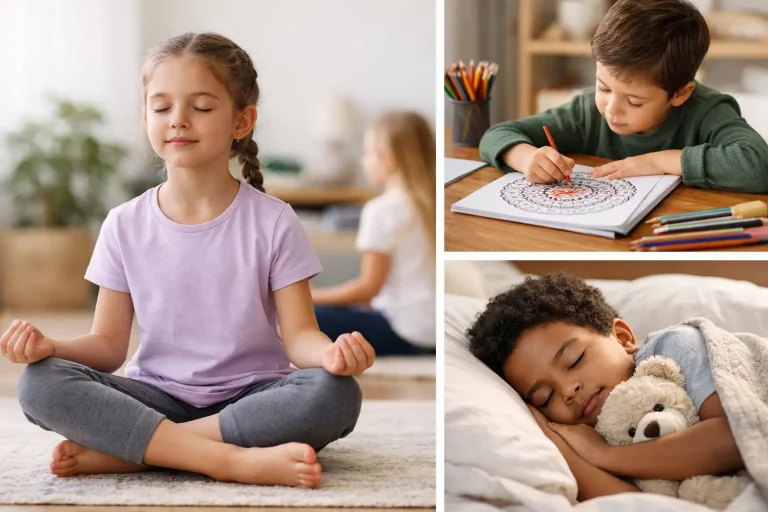
A calm plan at home can make a real difference, especially when it is repeated often enough for the body to learn a new pattern. Breathing exercises can help, but only if they are practised when your child is already fairly calm. Trying to teach deep breathing in the middle of panic can feel frustrating for everyone.
Many children respond well to simple grounding. You might ask them to feel both feet on the floor, hold a smooth stone in their pocket, or notice five blue things on the way to school. These small sensory anchors can bring attention back to the present moment.
Rehearsal also helps. If mornings are hard, walk through the sequence in a calm part of the day. You can mentally practise getting dressed, arriving at the gate, waving goodbye, and going into class. For some children, this removes the shock from transitions. For others, it gives them a sense of mastery.
Stories can be especially powerful because they lower resistance. A child who does not want advice may still absorb reassurance through a character who feels nervous, finds support, and discovers inner calm. Therapeutic stories work well because they meet children in the language of imagination rather than instruction. When this is paired with soothing audio, relaxation becomes something they can return to again and again, not just a one-off conversation. That repeatability matters. Calm is learned through experience.
Supporting the school without handing over everything
It can feel vulnerable to tell school that your child is struggling, especially if you worry they will be misunderstood. But a good teacher does not need your child’s whole life story to offer useful support. A simple, clear message is often enough.
You might explain what your child finds difficult, what helps at home, and whether there are key pressure points in the day. Sometimes a small adjustment makes a big difference – being greeted by name, entering through a quieter door, having a predictable goodbye routine, or knowing who to go to if worries rise.
At the same time, it helps to keep expectations realistic. Schools vary. Some can offer thoughtful flexibility; others have less capacity. If support feels limited, focus on what you can influence at home while continuing to advocate calmly for what your child needs.
When reassurance helps – and when it can accidentally feed anxiety
Most parents instinctively reassure, and often that is exactly what a child needs. Warmth, comfort and a steady presence are not the problem. The difficulty comes when reassurance turns into a ritual your child cannot function without.
If they must ask the same question ten times before leaving, or need a promise that nothing bad will happen, anxiety can start to depend on those answers. In that case, try offering comfort without feeding certainty. You might say, “I know your mind wants lots of guarantees today. What we do know is that you have got through hard mornings before, and I will help you with this one too.”
This approach validates the fear while gently building confidence. The goal is not to push children into bravery they do not feel. It is to help them discover that worry can rise and fall without controlling the whole day.
Knowing when school anxiety help needs to go further
Sometimes school worry is situational and passes with support. Sometimes it grows, and that is the point to widen the circle of help. If your child is missing large amounts of school, having frequent panic symptoms, not eating, struggling to sleep, or becoming increasingly low, it is wise to seek more tailored guidance.
That could involve speaking with the school pastoral team, your GP, or a qualified mental health professional with experience of children. Seeking extra support is not a sign that you have failed. It is often the kindest next step when anxiety has become bigger than family strategies alone can hold.
There is also a middle ground that many families find useful – therapeutic tools used consistently at home to settle the nervous system, improve sleep, and create emotional breathing space around the school day. This is often where gentle interventions can be especially helpful, because they do not ask a child to explain everything before they can begin to feel better. Peter Bates Holistic Books is built around this kind of support, offering children a safe, repeatable route back towards calm.
Helping your child feel capable again
Anxious children can begin to see themselves as the one who cannot cope. That identity can become as difficult as the anxiety itself. So alongside calming strategies, look for ways to reflect your child’s strengths back to them.
Notice effort rather than outcome. Tell them when they handled a tricky moment, even if it was messy. Remind them of times they felt worried and still got through. Confidence rarely appears all at once. More often, it grows quietly through small experiences of “I did not think I could, but I did”.
And if today was a hard day, that does not erase progress. School anxiety tends to ebb and flow. Some mornings will feel lighter, some heavier. What matters most is not perfection. It is the steady message your child receives from you: your feelings are real, you are safe, and we will keep finding gentle ways through this together.