
How to Ease School Anxiety Gently
Some children start worrying about school on Sunday afternoon. Others seem fine until shoes go on, breakfast is served, or the classroom door comes into view. If you are wondering how to ease school anxiety, it helps to know that the distress is often real long before a child can explain it clearly. What looks like reluctance, clinginess, tears, tummy aches, anger, or sudden exhaustion is often a nervous system asking for safety.
School anxiety can show up in loud ways or quiet ones. A child might cry at drop-off, refuse uniform, complain of feeling unwell, or become unusually controlling at home. Another child may say very little and simply carry a constant knot of dread. Neither response is overreacting. Both are signs that something feels too big to manage alone.
How to ease school anxiety without forcing confidence
Parents are often told to be firm, keep goodbyes short, and avoid feeding the fear. There is some truth in that, but on its own it can feel too blunt. Children do need steady boundaries, yet they also need help untangling the worries underneath them. Real support is not about talking a child out of their feelings. It is about helping their body feel calmer, their mind feel more prepared, and their day feel more predictable.
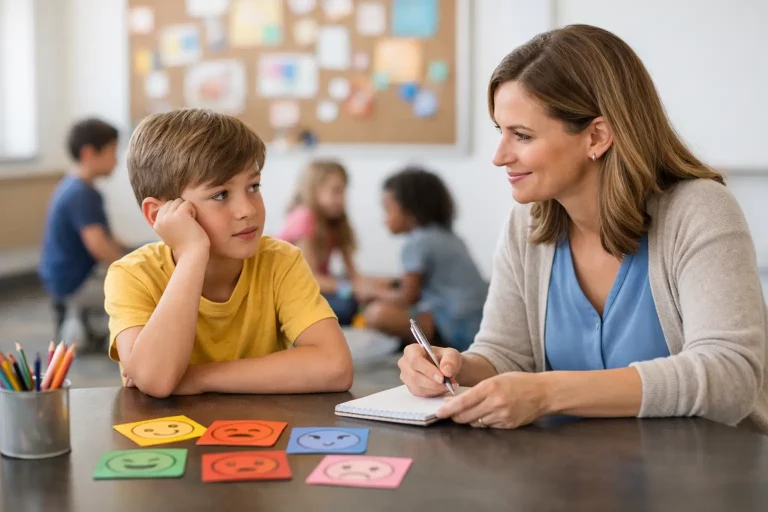
The first step is to get curious about the shape of the anxiety. Is your child worried about separation from you, social situations, noise, academic pressure, a strict teacher, toilets, bullying, transitions, or making mistakes in front of others? School anxiety is not one single problem. The more specific you can be, the more gently and effectively you can respond.
You may not get a clear answer straight away. Many children do not have the words for what is happening. They simply know that school feels unsafe or overwhelming. That is why observation matters. Notice when the anxiety peaks, what happens just beforehand, and what seems to make it soften even slightly. Small patterns often reveal the real pressure points.
Start with calm before problem-solving
When a child is in a heightened state, reasoning rarely lands well. A rushed morning lecture about resilience will not reach a nervous system in alarm. Before discussing attendance, behaviour, or solutions, focus on calm.
That might mean sitting beside your child and matching your breathing to a slower rhythm. It might mean warm, simple words such as, “I can see this feels hard” or “Your body is telling us it needs some help to feel safe.” These phrases do more than comfort. They reduce shame, which is often a hidden layer in school anxiety.
Once your child feels a little more settled, you can begin to explore what support would help. Some children need more preparation. Some need sensory comfort, such as softer clothing, a quieter start, or something reassuring in their pocket. Some need emotional rehearsal – knowing exactly what will happen, who will meet them, and what they can do if worry rises during the day.
Gentle routines help anxious mornings
Anxious children cope better when the morning asks less of them. That does not mean removing all challenge. It means removing unnecessary friction. Lay clothes out the night before. Keep breakfast familiar. Reduce noise where possible. Build in a few extra minutes so the whole household is not swept into urgency.
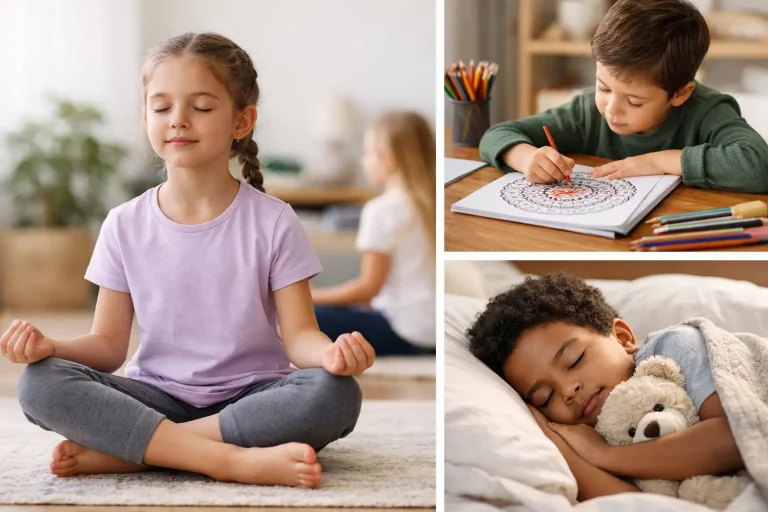
It can also help to create a short, repeatable rhythm before school. This might be a cuddle on the sofa, a calming audio, a few slow breaths, or a simple phrase said together each morning. The routine matters because anxiety thrives on uncertainty. Repetition gives the brain a message of safety.
Sleep deserves attention too. A child who is already tired has far less capacity for managing big feelings. If school anxiety is becoming a regular pattern, look beyond the school gate and ask whether evenings are helping your child settle well enough. A calmer bedtime can have a surprising effect on the next morning.
What to say when your child does not want to go
Words matter. An anxious child can hear “There’s nothing to worry about” as “Your feelings are wrong”. A better approach is to acknowledge the fear while holding steady. You might say, “I believe this feels scary, and I believe you can get through this with support.” That gives both compassion and confidence.
Try to avoid long negotiations in the heat of the moment. If every school morning turns into a debate, anxiety can become more fixed because the brain learns that panic changes the plan. Instead, offer calm certainty. “We are going to school, and I am going to help you do that in the gentlest way I can.” This is often more regulating than either harshness or endless persuasion.
Of course, there are times when stronger concern is needed. If your child is showing severe distress, persistent physical symptoms, sudden behavioural change, or signs that something specific at school is wrong, it is important to look deeper rather than simply push through.
Work with the school, not around it
One of the most effective ways to ease school anxiety is to make sure your child is not carrying it alone once they arrive. A brief, clear conversation with school can make a real difference. You do not need to provide a dramatic case. Often it is enough to explain what you are seeing, when it tends to happen, and what usually helps.
Ask practical questions. Could your child be greeted by a familiar adult? Could they enter through a quieter route if the playground feels too much? Is there a safe check-in point for difficult mornings? Sometimes very small adjustments create a much stronger sense of safety.
It is also worth remembering that support needs to fit the child. Some children benefit from lots of reassurance from staff. Others feel more exposed if too much attention is drawn to their worry. It depends on their age, temperament, and what is driving the anxiety in the first place.
Use stories and calming tools to support the nervous system
Children often process feelings more easily through story than direct questioning. A therapeutic story can help them recognise their own worries at a safe distance. Instead of feeling examined, they feel understood. This is especially helpful for children who shut down when asked, “What is wrong?”
Calming audio can be equally valuable, particularly when used consistently. Gentle guided relaxation, soothing imagery, and subconscious calming techniques can help a child shift out of a stress response and rehearse feeling safe. Over time, this can become part of a wider routine that teaches the body a new pattern.
For many families, the most useful tools are the ones that can be repeated at home without pressure. That is part of the thinking behind Peter Bates Holistic Books – giving parents and carers supportive, therapeutic resources they can return to again and again when a child needs help finding inner calm.
When school anxiety may need extra support
There is no prize for waiting too long in the hope that a child will simply grow out of it. If school anxiety is escalating, affecting sleep, appetite, friendships, or family life, or leading to regular refusal, it may be time to seek further help. That does not mean you have failed. It means your child’s worry needs a bigger circle of support.
Sometimes anxiety is linked to a recent change, such as moving class, friendship difficulties, or academic pressure. Sometimes it sits alongside sensory needs, neurodivergence, low mood, or earlier experiences that have made school feel unpredictable. The right support depends on the whole picture.
A gentle but steady approach is usually best. Children need to feel heard, but they also need to feel held by adults who can tolerate the worry without being ruled by it. That balance can be hard for parents, especially when your child’s distress is breaking your heart. Be kind to yourself in that process. Your calm matters, but you are allowed to find it difficult too.
Helping your child feel braver, not pushed
Bravery is often misunderstood. It does not mean a child stops feeling scared. It means they begin to discover that fear can move through them without taking over everything. That discovery usually happens in small steps – one calmer bedtime, one easier morning, one successful handover, one day that felt a little less heavy.
If you are trying to work out how to ease school anxiety, aim for steady safety rather than instant transformation. Notice what soothes your child’s body, what strengthens trust, and what helps school feel more predictable. Children do not need perfection from us. They need the sense that their big feelings can be met with warmth, wisdom, and a plan.
Sometimes the most healing message a child can receive is this one: you are safe, you are understood, and you will not have to manage this all on your own.