How to Teach Calming Visualisation to Children
A child who is worrying rarely needs to be told simply to calm down. They need a gentle route out of the busy thoughts, tight tummy or racing heart they are feeling. Learning how to teach calming visualisation gives you a simple, comforting way to help them find that route, whether the worry arrives at bedtime, before school, or after a difficult day.
Calming visualisation is not about making a child ignore their feelings or pretend that everything is fine. It is about offering their mind and body a peaceful place to rest for a few moments. With kind repetition, it can become a familiar tool they can return to when big feelings begin to take over.
What calming visualisation can offer a child
Visualisation uses the imagination to create a soothing inner experience. A child might picture a warm, cosy den, a favourite beach, a quiet woodland path, or a safe place entirely of their own making. As they focus on gentle details – colours, sounds, warmth and comfort – their attention moves away from the worry spiral and towards a sense of safety.
For younger children, this often works best as a short, story-like moment shared with a parent or carer. Older children and young people may prefer a more private practice, perhaps with a calming audio recording before sleep or ahead of an exam.
The aim is not to make worries disappear on command. It is to help a child notice that they have an inner calm they can visit, even when life feels unsettled. That sense of choice can be deeply reassuring.
How to teach calming visualisation gently
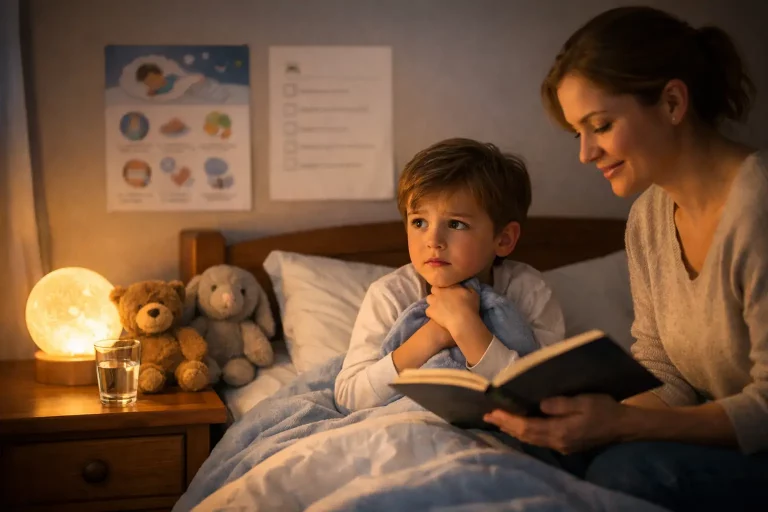
Choose a calm moment to introduce visualisation, rather than trying it for the first time in the middle of a meltdown. Bedtime, after a bath, or a quiet few minutes after tea can work well. Keep the first practice brief: two or three minutes is plenty. Ending while your child is still comfortable helps the experience feel manageable and positive.
Begin by asking permission in a relaxed way: “Would you like to imagine somewhere peaceful together for a minute?” Children are more likely to settle when they feel included rather than directed. If they say no, let it go kindly and try another time. This is an invitation, not a test.
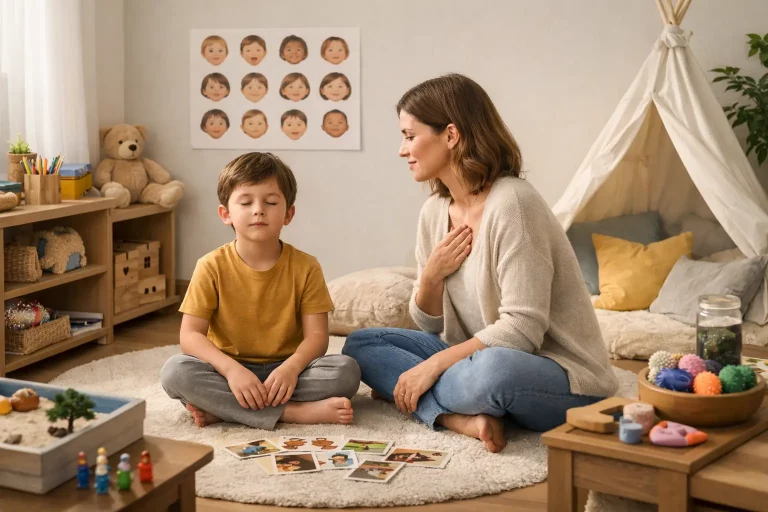
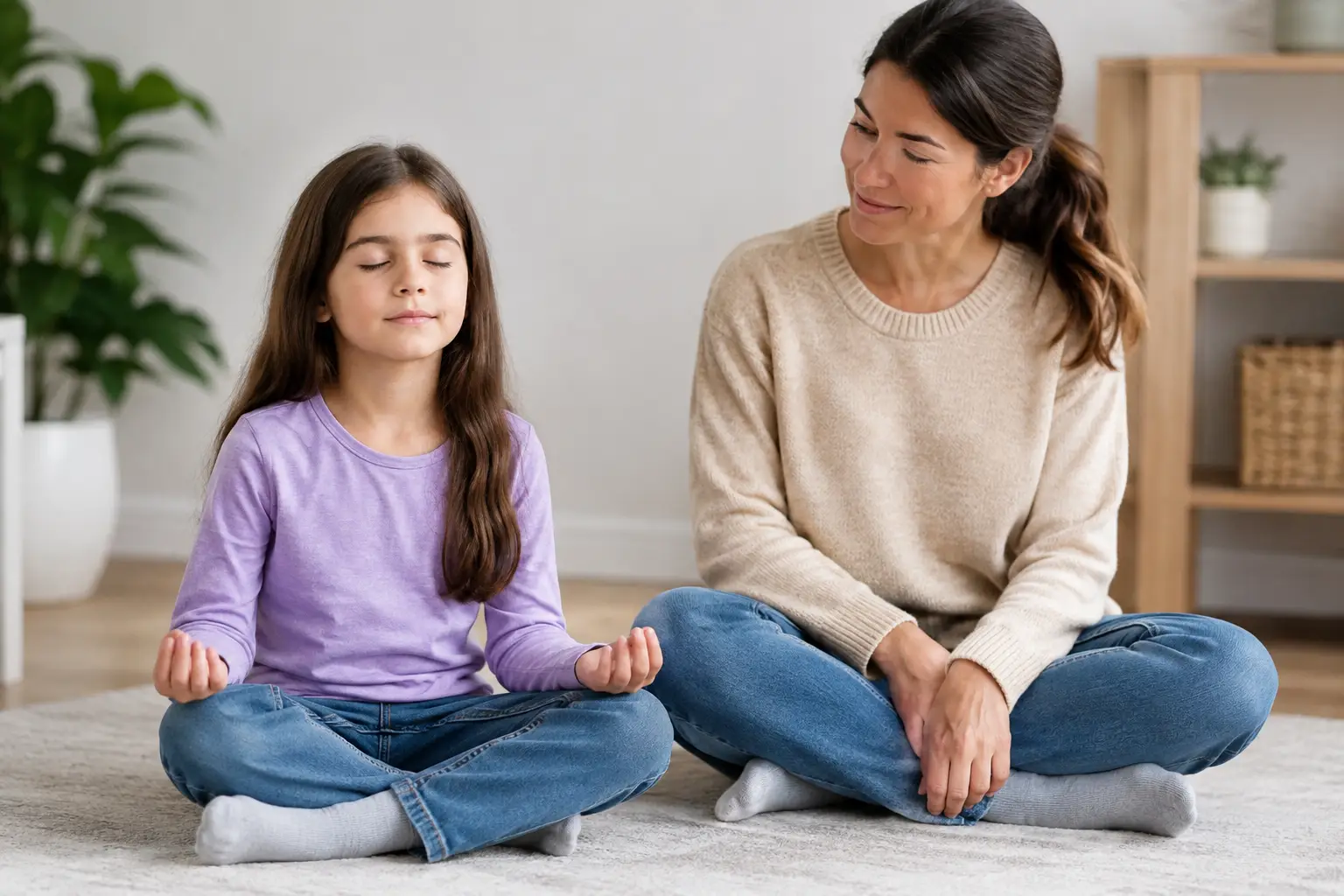
Ask them to get comfortable sitting or lying down. They do not need to close their eyes. Some children feel safer looking at a soft toy, a spot on the wall or a dim night-light while they listen. Invite one slow breath in and an unhurried breath out, without making breathing feel like another task they must get right.
Then offer a simple scene, slowly and with plenty of pauses. You might say:
“Imagine a place where you feel safe and cosy. It could be real, or it could be somewhere you make up. Notice what is underneath you. Is it soft grass, warm sand, a blanket, or something else? What colours can you see there? Is the air warm or cool? In this place, nothing needs to be solved right now. You are safe to rest for a little while.”
Leave quiet spaces between sentences. Children need time to form their own pictures, and some may not create clear images at all. They might sense a feeling, remember a sound, or simply enjoy hearing your calm voice. All of these responses are perfectly valid.
Let your child lead the picture
A visualisation is most soothing when it belongs to the child. Rather than insisting on a particular beach, cloud or magical garden, be curious about what feels comforting to them. One child may choose a treehouse with fairy lights; another may feel calmer imagining their dog nearby, a football pitch after everyone has gone home, or being wrapped in a giant warm duvet.
Use gentle questions to build the scene. “Who or what would you like nearby?” “What sound tells you that this place is peaceful?” “Is there something in your safe place that helps worries feel smaller?” These questions give children language for comfort without asking them to explain every difficult feeling.
For very young children, keep the choices concrete. A favourite teddy can become a calm companion who knows the way to a cosy cave. A boat can float slowly across a still lake, carrying worries away for later. The details matter less than the feeling of being cared for and safe.
With older children, avoid making the practice sound babyish. They may respond better to imagining a quiet room, a familiar holiday view, or a place where they feel capable and steady. Before a test or performance, they might picture walking in with relaxed shoulders, taking one slow breath and beginning one question at a time. This is not about guaranteeing an outcome; it is about rehearsing calm and self-trust.
Use your voice as part of the calm
Your pace matters as much as the words. Speak more slowly than you think you need to, and soften your voice without whispering dramatically. A predictable rhythm can help a child’s nervous system settle, particularly at the end of a noisy or demanding day.
Try not to fill every silence. A pause of five or ten seconds may feel long to you, but it gives your child room to picture, feel and settle. If they begin talking excitedly about their imaginary place, listen and follow their lead. If they become quiet, allow that too.
It can help to end with a simple phrase that stays the same each time: “You can come back to this calm place whenever you need it.” Repetition creates familiarity. Over time, a child may be able to recall a colour, a sound or a single comforting phrase when they are away from home.
Keep the routine short and repeatable
The most helpful visualisations are usually the ones a family can actually use. A ten-minute practice may be lovely on a peaceful Sunday evening, but a two-minute version is more likely to support a child on a busy school night.
You could use the same visualisation for a week, allowing the safe place to become detailed and familiar. Or you might create small routines for different moments: a cosy nest for bedtime worries, a steady mountain for confidence, or a gentle bubble of space after an overwhelming day.
A story and companion audio can also be useful when a child prefers listening to a soothing voice without needing a parent to guide every session. At Peter Bates Holistic Books, therapeutic storytelling is designed to give families repeatable ways to untangle worries and support inner calm at home.
When visualisation does not feel right
Not every child enjoys closing their eyes or imagining pictures, and that is absolutely fine. Some children, including those who are very anxious, neurodivergent or feeling overwhelmed, may find inner imagery uncomfortable. Offer alternatives: looking at a calming object, listening for three quiet sounds, stroking a soft blanket, or naming five things that feel safe in the room.
If a visualisation brings up distressing thoughts, gently stop. Bring attention back to the present by noticing the floor under their feet, taking a sip of water, or describing what they can see around them. Avoid pushing through in the hope that they will settle.
For persistent anxiety, panic, sleep difficulties or distress that is affecting everyday life, visualisation can sit alongside support from a GP, school pastoral team or qualified mental health professional. It is a caring tool, not something a child has to manage alone.
A calm place they can carry with them
The real value of calming visualisation is not in creating the perfect script. It is in the quiet message beneath it: your feelings make sense, you are safe with me, and there is a way through this moment. Each small practice can help a child build a kinder relationship with their own mind – one peaceful picture, one slow breath and one reassuring pause at a time.