
Example Therapeutic Stories for Anxiety at Home
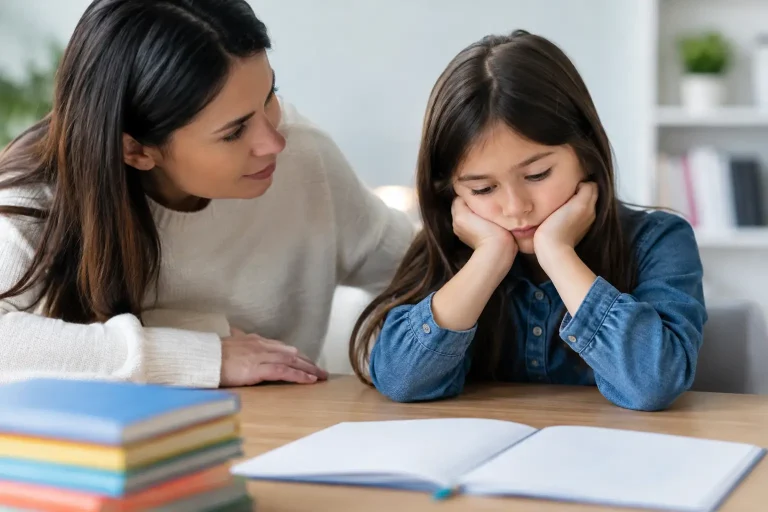
A child may look settled at the dinner table, then become tearful the moment the lights go out. Another may say they have a tummy ache every school morning, without having the words for the worry underneath. Example therapeutic stories for anxiety give children a gentle, indirect way to meet those feelings. Rather than asking them to explain everything at once, a story lets them see a worry reflected in a safe character and imagine a calmer ending.
For parents and carers, this can be a comforting place to begin. A well-chosen story does not dismiss big feelings or insist that a child must be brave. It helps them untangle the worries, feel understood and practise returning to their own inner calm.
Why therapeutic stories can ease anxious feelings
Children often communicate anxiety through behaviour before they can describe it. They may become clingy, restless, cross, quiet, tearful or unable to settle at bedtime. A direct question such as, “What are you worried about?” can feel too large, especially when the child does not yet know the answer.
Therapeutic storytelling creates a little breathing space. When the worry belongs to a small fox, a nervous cloud or a child preparing for a challenge, it is easier to talk about. The child can say, “I think I feel like that,” without feeling exposed or judged.
The repetition matters too. Returning to a familiar calming story can become part of a predictable routine, particularly before sleep or ahead of a stressful event. Over time, children may begin to remember the character’s soothing words, slow their breathing or picture their own safe place. This is not a quick fix for every kind of anxiety, but it can be a practical and reassuring support at home.
What makes a story therapeutic rather than simply soothing?
Many lovely children’s books are comforting, but a therapeutic story has a clearer emotional purpose. It gently names a recognisable difficulty, offers a believable way through it and leaves the listener with a sense of safety and capability.
The character should not suddenly stop worrying because somebody tells them to. Instead, they might notice the feeling in their body, receive kindness from a trusted guide, find a small coping tool and discover that they can take one manageable step at a time. This mirrors the real experience of learning emotional regulation.
Language is important. Phrases such as “you do not have to solve every worry tonight” or “your body can learn to feel safe again” are more helpful than promises that nothing difficult will ever happen. Children need reassurance, but they also benefit from learning that feelings can move and change.
Three example therapeutic stories for anxiety
These short examples show how a story can support different kinds of worry. They can be read slowly, with pauses, or used as inspiration for a story that reflects your child’s own experiences.
The little hedgehog who carried tomorrow
Hattie the hedgehog collected things she thought she might need for tomorrow. She carried an acorn in case she felt hungry, a feather in case she needed cheering up and three shiny stones in case she made a mistake at school. By bedtime, her small bag was so heavy that she could hardly curl into a ball.
Her grandmother sat beside her and said, “Tomorrow has not arrived yet, Hattie. You do not need to carry all of it through the night.” Together, they placed each item beside the burrow door. They kept one smooth stone under Hattie’s paw, just as a reminder that she could take one thing at a time.
As Hattie breathed in, she imagined making space inside herself. As she breathed out, she imagined placing one worry outside the door. The worries did not vanish, but they no longer had to sleep in her bed.
This story can help children who become anxious about the next day, school, friendships or change. Afterwards, you might ask, “If Hattie could leave one thing outside the door tonight, what might it be?” If they do not want to answer, simply letting them hold a smooth stone or choose a small comfort object can be enough.
Milo and the storm in his tummy
Milo noticed a storm in his tummy whenever his teacher asked the class a question. His hands went cold and his thoughts ran so fast that he could not catch a single one. He worried that everyone would see he did not know the answer.
One morning, Milo’s teacher told the class that storms have different sizes. Some are loud and wild; some are only a few raindrops. She showed them how to put one hand on their tummy and one on their chest, then breathe as though they were slowly warming a cup of hot chocolate.
When Milo felt the storm begin, he did not have to make it disappear. He quietly warmed his imaginary cup. He looked at the first word of the question, then the second. On some days, he raised his hand. On other days, he waited and listened. Each time, he learned that a stormy tummy could be with him without being in charge of him.
This is useful for children facing classroom anxiety, social worries or unfamiliar activities. It also gives parents a simple phrase to use before school: “You may feel a few raindrops today, and you know how to warm your cup.”
Amira’s lantern for the big day
Amira had worked hard for her exams, but the closer they came, the more she thought about everything that could go wrong. At night, her mind replayed questions she might not understand and imagined disappointing people she loved.
Her older cousin gave her a small paper lantern. “This lantern does not show you every step,” he said. “It only lights the next one.” Amira wrote three things on strips of paper: eat breakfast, read each question slowly, and take a steady breath when her thoughts raced. She placed them inside the lantern.
On the morning of the exam, Amira still felt nervous. But she remembered that nervousness meant something mattered to her. She did not need to know every answer before she began. She only needed the light for the next step.
For young people dealing with exam stress, this story respects the pressure without making grades the measure of their worth. It can also be adapted after disappointing results. The lantern may then hold different next steps: rest, speak to someone trusted, explore options and remember that one result cannot tell the whole story of a person’s ability or future.
How to use therapeutic stories at home
The calm around the story is almost as helpful as the words themselves. Choose a time when nobody needs to rush. Bedtime works well for many families, but some children are too tired then and may respond better after tea, on the school run or during a quiet weekend moment.
Read more slowly than you think you need to. Let the child look at the pictures, hold a comfort item or sit close if they wish. There is no need to turn every story into a discussion. A simple “I wonder how that felt for Hattie” leaves the door open without pressure.
If your child enjoys audio, a gentle guided recording can reinforce the same calming message. Hearing a soothing voice, practising slow breathing and revisiting familiar imagery can make the experience easier to repeat when worries return. Some children prefer listening with their eyes closed; others feel safer following a book at the same time. It depends on their age, sensory preferences and the kind of anxiety they are carrying.
Consistency is more valuable than perfection. Reading the same story several times is not a failure of imagination. Familiar words can become a steady emotional anchor, especially during unsettled periods.
When a story needs extra support around it
Therapeutic stories are a kind home-based tool, but they are not a replacement for professional support when anxiety is severe, persistent or affecting everyday life. Speak with your GP, school pastoral team or a qualified mental health professional if your child is regularly unable to sleep, attend school, eat, socialise or take part in ordinary activities. Seek urgent help if they talk about harming themselves or not wanting to be here.
A story can still sit alongside that support. It may give a child a familiar language for feelings that are difficult to say aloud, and offer a peaceful moment in a week filled with appointments or change.
The most powerful message a child can receive is not that they must never feel worried. It is that their big feelings are welcome, they are not alone with them, and calm can be practised one small, gentle moment at a time.