
How to Help a Child Regulate Emotions
A child who is shouting, sobbing or shutting down is not giving you a hard time – they are having a hard time. That small shift matters. If you are wondering how to help a child regulate emotions, the first step is to look beneath the behaviour and see the overwhelmed nervous system underneath it.
For many parents and carers, the hardest part is that big feelings rarely arrive at a convenient moment. They show up before school, at bedtime, after an argument with a sibling, or when a child is already tired and stretched thin. In those moments, children do not need perfect words or a complicated strategy. They need calm, safety and a grown-up who can hold steady while the storm passes.
What emotional regulation really means
Emotional regulation is not about making a child stop crying, calm down on command, or behave perfectly. It is the gradual ability to notice feelings, tolerate them, and move through them without becoming completely overwhelmed.
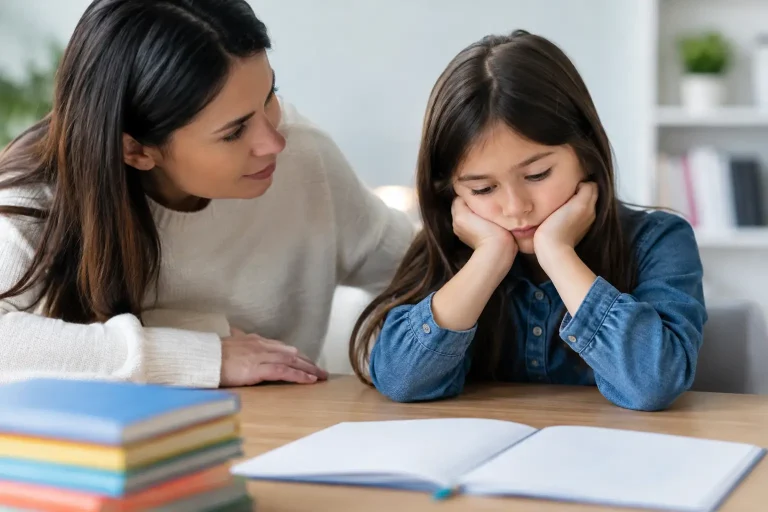
That ability develops over time. Young children borrow regulation from adults before they can do much of it alone. Even older children may struggle when they are hungry, overstimulated, anxious or carrying worries they cannot yet explain. So when a child melts down over the wrong cereal bowl or bursts into tears over homework, the problem is often bigger than the moment itself.
This is why punishment, lectures or repeated demands to use their words often fall flat when emotions are high. A distressed child is not in a place to reason well. First they need to feel safe in their body. Then they can begin to make sense of what happened.
How to help a child regulate emotions in the moment
When emotions are already running high, your job is not to fix everything instantly. It is to reduce the sense of threat and help the child come back to balance.
Start with your own tone and pace. Speak more slowly than usual. Lower your voice rather than raising it. Children notice our nervous system before they take in our words, so a calm presence often works better than lots of talking.
Simple phrases can help because they bring clarity without pressure. You might say, “You’re safe. I’m here.” Or, “That feels really big right now.” This kind of language does not reward difficult behaviour. It tells the child they do not have to face the feeling alone.
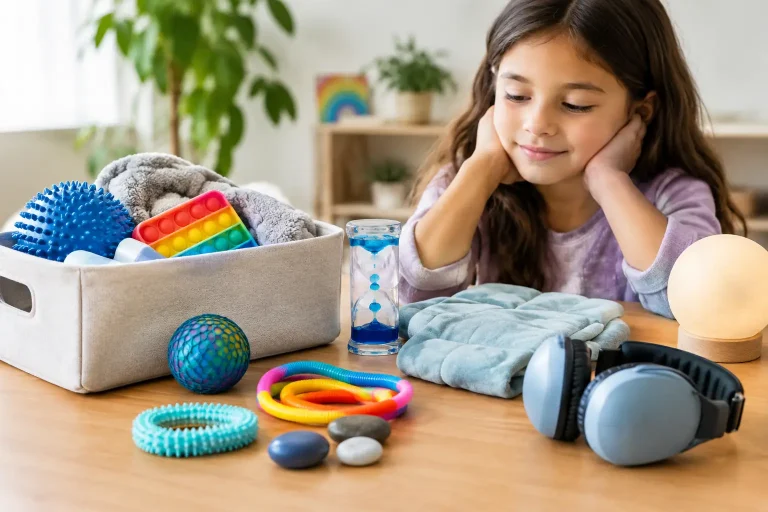
If your child likes physical reassurance, sit beside them, offer a cuddle, or place a steady hand on their back. If they do not want touch, respect that. Some children regulate better with space, dimmer lights, quieter surroundings, or a familiar object such as a blanket or soft toy.
Breathing can help, but only if it is offered gently. In the middle of a meltdown, “Take a deep breath” may feel impossible or irritating. It can be more effective to breathe slowly yourself and invite them to copy you when they are ready. The same applies to sensory support. A sip of water, a slower environment, soft music, or a soothing bedtime story can help untangle the intensity.
Why connection comes before correction
Parents often worry that too much empathy will encourage emotional outbursts. In reality, children learn self-control through repeated experiences of being understood and guided, not through feeling shamed for struggling.
Connection does not mean saying yes to everything. It means holding a boundary kindly. A child can be upset that screen time is over, and you can still keep that limit. The difference is in how you hold it. “I know you’re disappointed. It’s hard to stop when you’re enjoying it. We’re finished for today.” This approach validates the feeling without giving away the boundary.
When children feel emotionally safe, they are more able to hear guidance. When they feel threatened or dismissed, they tend to escalate or shut down. That is why connection is not a soft option. It is often the quickest route back to steadiness.
Look for the pattern, not just the outburst
If you want lasting change, it helps to become a calm observer. Ask yourself what tends to happen before the big feelings arrive. Some children unravel when they are tired. Others are sensitive to noise, transitions, hunger, social pressure, or the after-effects of holding it together all day at school.
A child who seems fine until bedtime may not be “playing up”. Bedtime often creates space for worries that were pushed aside during the day. A child who explodes after school may have used so much energy coping in the classroom that very little is left by the time they get home.
Once you spot the pattern, support becomes easier. Earlier meals, quieter evenings, more transition time, and less overscheduling can make a meaningful difference. Emotional regulation is not built only in dramatic moments. It is supported by rhythm, rest and a sense of predictability.
Helping children build regulation over time
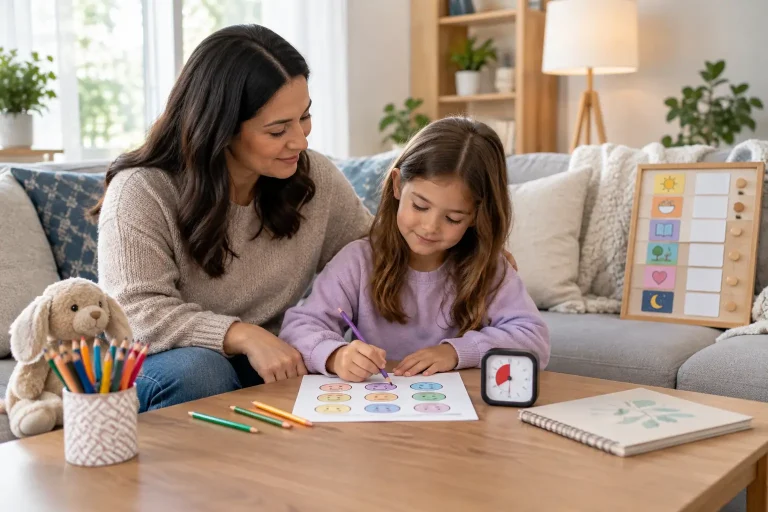
The most effective emotional support usually happens outside the meltdown. This is when children can learn what feelings are, where they show up in the body, and what helps them feel calmer.
You might talk about emotions in simple, everyday language. “Your shoulders look tight.” “That worry seems to be sitting in your tummy.” “It sounds as if you felt left out.” Naming feelings helps children develop emotional literacy, which is one of the foundations of regulation.
Calm routines also matter. A gentle bedtime ritual, quiet reading, therapeutic audio, or a few peaceful minutes together can help the nervous system settle more regularly. This is especially helpful for children who carry anxiety, bedtime worries or emotional overwhelm. Repetition creates familiarity, and familiarity creates safety.
Story can be particularly powerful because it allows children to recognise their feelings at a safe distance. A child may resist direct conversation about fear or anger but engage easily with a character who is having similar struggles. That is one reason therapeutic storytelling can be such a useful home support. It helps children feel seen without putting them on the spot. For families looking for practical, nurturing tools, this is very much the thinking behind Peter Bates Holistic Books.
When a child’s emotions come out as anger
Anger is often the emotion that adults find hardest to meet calmly. It can feel loud, defiant and personal. Yet anger in children is frequently a protective layer over hurt, embarrassment, fear or helplessness.
That does not mean aggressive behaviour is acceptable. Safety comes first. If a child is hitting, throwing or lashing out, keep your response clear and steady. “I won’t let you hit.” “I’m moving this to keep everyone safe.” Firmness and warmth can sit together.
Later, when the child is calm, you can help them look beneath the anger. Was something unfair? Were they feeling rushed, ashamed or worried? Over time, children begin to understand that anger is a signal, not the whole story.
When regulation difficulties may need extra support
Sometimes a child needs more than home-based strategies, especially if their distress is frequent, intense, or affecting sleep, school, friendships or family life in a significant way. Persistent panic, prolonged low mood, sensory overwhelm, trauma, neurodivergence, or sudden changes in behaviour may all need deeper support.
Seeking help is not a failure. It is a caring response. A GP, health visitor, school pastoral lead, counsellor or other child wellbeing professional may help you understand what is driving the struggles and what support would fit best.
There is also an important trade-off to recognise here. Not every emotional outburst is a sign of a serious problem, and not every child benefits from the same method. Some respond well to talking, others to movement, creative play, story, sensory calm, or guided relaxation. It often takes a little gentle experimenting to discover what truly helps your child feel safe and steady.
What your child needs most from you
Children do not learn emotional regulation because an adult says the right sentence once. They learn it through hundreds of small experiences of being soothed, understood, and guided back to calm. They learn that feelings can be big without being dangerous. They learn that they can wobble without losing connection.
So if progress feels slow, that does not mean you are getting it wrong. Every time you pause before reacting, every time you help name a feeling, every time you offer calm instead of shame, you are building something lasting inside your child.
And sometimes that is how emotional resilience begins – not with a dramatic breakthrough, but with one safe, steady moment after another.