
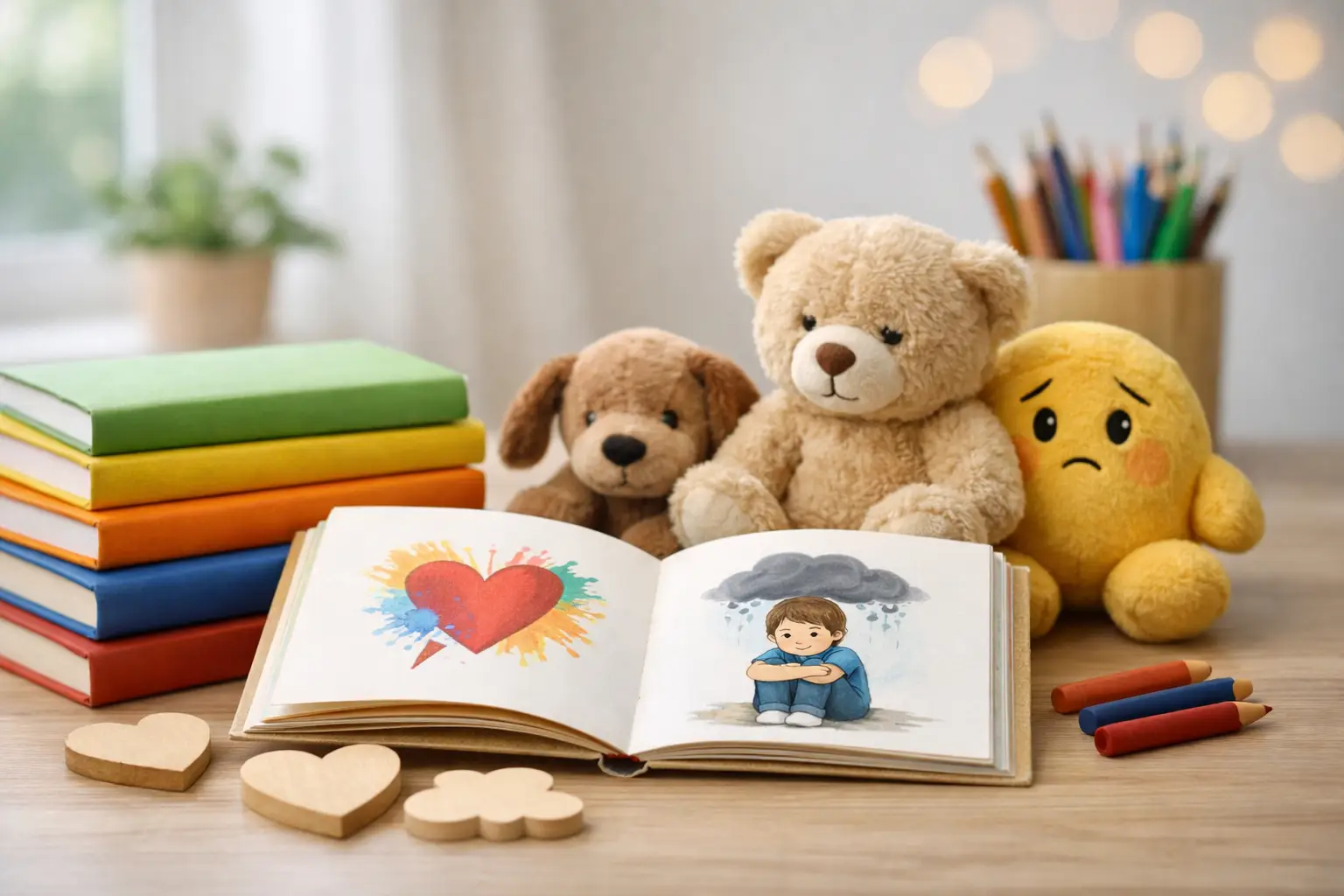
Best books about big feelings for children
Some children cry over what looks like a small upset, while others go quiet, clingy or cross long before they have words for what is happening inside. That is why books about big feelings for children can be so valuable. The right story does more than name an emotion – it helps a child feel seen, safe and a little less alone in it.
For parents and carers, that matters enormously. When a child is overwhelmed, a book can offer gentle structure at the very moment family life feels muddled. It slows things down, gives feelings a shape, and opens the door to calm conversations that are often much harder face to face.
Why books about big feelings for children can help
Children rarely experience emotions in neat categories. Fear can come out as anger. Tiredness can look like defiance. Sadness can sit underneath tummy aches, bedtime battles or tears over the wrong coloured cup. A thoughtful book helps untangle that confusion without making a child feel corrected or analysed.
Stories work well because they create a safe step back. A child may not want to say, “I feel worried all the time,” but they may happily talk about a character who feels a fluttery tummy before school or cannot settle at night. That little bit of distance lowers pressure. It allows recognition without confrontation.
There is also comfort in repetition. Children often ask for the same story again and again, especially when they are carrying something emotionally heavy. That is not accidental. Re-reading helps the nervous system settle. Familiar words, familiar rhythm and a familiar emotional journey can become part of a child’s sense of safety.
For some families, a book is enough to start that shift. For others, it works best as one part of a wider calming routine, perhaps alongside quiet breathing, soft music, guided relaxation or therapeutic audio. It depends on the child, the feeling involved and how deeply that feeling is affecting daily life.
What to look for in books about big feelings for children
Not every feelings book is equally helpful. Some are warm and supportive. Others are well meant but so busy teaching a lesson that the child’s emotional experience gets lost. The best ones tend to feel emotionally honest first and educational second.
A good book names feelings clearly, but without becoming preachy. It should reassure children that emotions are normal, even the uncomfortable ones. Anger, jealousy, grief, fear and frustration are not bad feelings. They are signals, and children need help learning what to do with them.
It also helps when a book offers regulation, not just recognition. Naming an emotion is a start, but many parents are really looking for support with what comes next. Can the story model calming down after a storm of tears? Can it show a child asking for help, taking a breath, resting, or finding reassurance in a trusted adult?
Age matters too. A preschool child usually needs simple language, emotional clarity and strong visual cues. An older child may respond better to more layered storytelling, especially if they are embarrassed by books that feel too babyish. Sensitive children in particular can reject anything that feels patronising.
Another point worth considering is tone. If a child is already anxious or emotionally overloaded, a highly dramatic book may not soothe them, even if the ending is positive. Sometimes the gentlest books are the most effective because they settle the body as well as the mind.
The feelings parents most often want help with
Many families begin looking for emotional support books when a particular struggle keeps repeating. Bedtime fears, school worries and angry outbursts are common starting points, but they are not the whole picture.
Worry is one of the most frequent themes. A child may worry about school, friendships, tests, separation or things they cannot fully explain. Books that treat worry kindly, rather than dismissing it, can help a child feel understood. It is reassuring when a story shows that worry can shrink, soften or pass.
Anger is another big one, though anger in children is often misunderstood. What looks like rudeness or stubbornness may actually be overwhelm. Books on anger work best when they avoid shaming language and instead show what anger feels like in the body, along with safe ways to release it.
Sadness and grief need special care. A child does not have to be bereaved to feel grief. Changes in family life, friendship difficulties, moving home or losing a beloved pet can all bring deep feelings. Gentle stories can make room for tears without rushing children towards being cheerful again.
Then there is emotional overwhelm itself – that sense of everything being too much. For these children, books that are soothing in rhythm and emotionally containing can make a real difference. They can become part of a repeatable routine that tells the child, “You are safe. We can settle this together.”
How to choose the right book for your child
The best choice is not always the most popular title. It is the one that meets your child where they are.
Start by thinking about what happens around the feeling. Does your child melt down after school, struggle to separate from you, or become restless at bedtime? A book linked to the real-life pattern is often more useful than a general feelings book that tries to cover everything at once.
Next, consider how your child likes to engage. Some children love direct books that explicitly name emotions. Others prefer stories where the emotional theme sits gently in the background. If your child resists talking about feelings, a subtle story may open more doors than a very obvious one.
You may also want to notice whether your child needs calm or confidence. Those are not always the same. A worried child often needs soothing first. A child who feels defeated or helpless may need stories that quietly build courage and inner steadiness.
If possible, read the book yourself first. You are checking not only the message but the feeling it leaves behind. Does it comfort? Does it create breathing space? Does it offer reassurance without pretending everything is easy? Parents often know instinctively when a book feels right.
Making story time more therapeutic
A feelings book becomes more powerful in the way it is used. You do not need to turn reading into a counselling session. In fact, most children do better when the experience stays light, calm and unforced.
Read when your child is relatively settled, not in the peak of a meltdown. During a storm of emotion, the nervous system is not ready to absorb much. Later, when calm has returned, a story can help your child revisit the feeling in a safer way.
Keep your questions simple. Instead of asking, “Why do you think you behave like that?” try, “Have you ever felt a bit like this?” or “What do you think helped the character?” Gentle curiosity is usually enough.
It can also help to pair the book with a sensory cue your child comes to associate with safety – a blanket, dim lighting, a cuddle, or a few minutes of calming audio after the story. This is where therapeutic storytelling can be especially effective. At Peter Bates Holistic Books, that blend of story and guided audio is designed to support not only understanding, but settling too.
Most importantly, let the story do some of the work. Children often process in their own time. A comment made three days later in the car may tell you the book has landed far more deeply than you realised.
When a book is helpful, but not enough
Books can be wonderfully supportive, but they are not a cure-all. If your child’s worries are persistent, sleep is regularly disrupted, school refusal is increasing, or emotional outbursts are becoming harder to manage, a book may need to sit alongside extra support.
That is not a sign of failure. It simply means your child may need more help to feel regulated and secure. Home-based tools can still play an important part, especially when they create consistency and comfort between other forms of support.
There is also no perfect book for every child. One child will cling to a story for months. Another will shrug at it and respond better to audio, drawing, movement or quiet one-to-one time. Emotional support is rarely one-size-fits-all.
The hopeful part is this: children do not always need huge interventions to begin feeling better. Often, they need repeated experiences of safety, understanding and calm. A well-chosen story can become one of those experiences. It can give language to the feelings that felt too big, and help a child discover that those feelings can move through – not take over.
If you are choosing a book for a child with a full heart and a busy mind, trust the value of something gentle. A calm voice, a reassuring story and a few shared minutes at the end of the day can do more than fill time. They can help a child feel held while they learn that even big feelings can soften.