
Sleep Stories for Worried Children That Help
When a child is tired but cannot switch off, bedtime can feel far longer than the clock suggests. Sleep stories for worried children can help soften that unsettled space between being awake and drifting off, especially when a busy mind keeps replaying the day, imagining tomorrow, or holding on to fears that seem much bigger in the dark.
For many families, the struggle is not simply getting a child into bed. It is helping them feel safe enough to rest. A worried child may ask repeated questions, need a parent close by, complain of tummy aches, or become tearful just as the lights go out. In those moments, what helps most is rarely pressure or persuasion. It is calm, consistency and the right kind of emotional support.
Why sleep stories for worried children can work
A well-crafted sleep story does more than fill a few quiet minutes. It gives the mind something gentle to follow. Instead of circling around worries, a child is guided towards softer images, steadier breathing and a sense of safety. That shift matters because anxious thoughts often become louder at night, when there are fewer distractions and a child is left alone with their feelings.
Stories are especially powerful for children because they speak the language of imagination. A direct instruction such as “stop worrying” almost never works. A story about a small character finding calm in a moonlit garden, meeting safe helpers, or learning how to let thoughts float by can reach a child in a very different way. It does not argue with the worry. It gently untangles it.
There is also something reassuring about rhythm and repetition. The right bedtime story has a slower pace, soothing language and emotional predictability. That helps the nervous system settle. Children who feel overwhelmed often need this sense of containment before sleep can happen naturally.
What makes a bedtime story genuinely calming
Not every bedtime story is suitable for an anxious child. Some children’s books are lively, funny or adventurous, which is lovely at other times of day, but not always helpful at bedtime. If a story is too stimulating, too dramatic or too emotionally intense, it can keep the mind alert rather than inviting rest.
The most effective sleep stories for worried children tend to have a few qualities in common. The pace is slow and steady. The language is simple, reassuring and repetitive without feeling dull. The emotional arc feels safe, so there are no sharp surprises, high tension or chaotic endings. Most importantly, the child listening feels gently held by the story rather than swept along by it.
It also helps when the story acknowledges feelings without dwelling in them. A child who worries at night does not always need a tale that mirrors every fear exactly. Sometimes they need a softer indirect route – a story that creates the feeling of calm first, so their body can begin to believe it is safe.
When stories alone are enough – and when they are not
For some children, a calming story at bedtime can make a noticeable difference quite quickly. If their worries are mild, situational or linked to a recent change such as starting school, sleeping in their own room, or feeling unsettled after a busy week, a consistent sleep story routine may be enough to restore more peaceful evenings.
For others, bedtime anxiety runs deeper. A child may be carrying school stress, friendship worries, grief, separation anxiety or a generally heightened nervous system. In those cases, stories still help, but they work best as part of a wider calming routine. That might include a quieter evening, less screen time before bed, soothing audio, breathing support, and a parent who can stay emotionally steady even when the child is struggling.
This is where therapeutic storytelling can offer something more purposeful than a standard bedtime book. Rather than entertainment alone, it becomes a repeatable wellbeing tool – one that supports relaxation, emotional safety and a gradual change in the way bedtime feels.
How to use sleep stories for worried children at bedtime
The way a story is introduced matters almost as much as the story itself. If bedtime already feels tense, parents can understandably slip into problem-solving mode. Yet anxious children often respond better when the routine feels calm and unhurried.
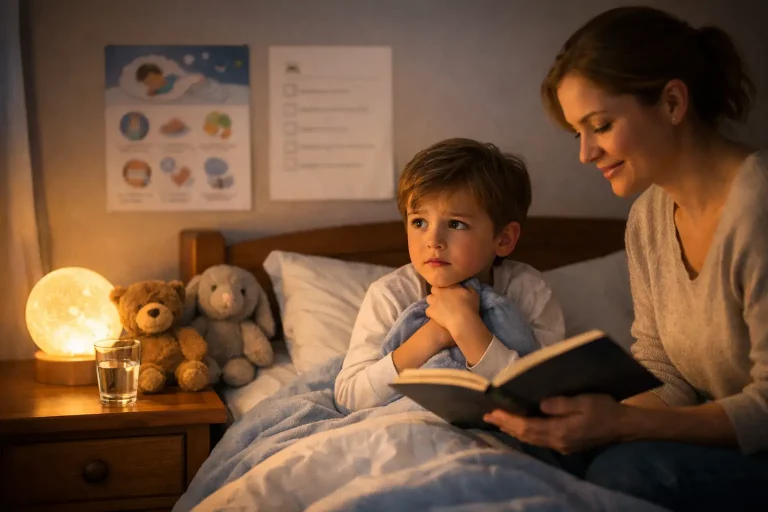
Start a little earlier than you think you need to. A rushed bedtime can make worries spike. Dim the lights, lower the noise in the house and let the story become a clear signal that the day is finishing. If your child likes physical comfort, a blanket, soft toy or gentle hand on the back can help them receive the story more fully.
Read slowly, with pauses. There is no prize for finishing the book. If your child interrupts with questions, answer briefly and warmly, then return to the flow of the story. The goal is not perfect listening. It is helping their body and mind move towards rest.
Some children settle best when a parent reads. Others respond more deeply to companion audio, especially if the voice is steady and soothing and includes elements of guided relaxation. Audio can be particularly helpful when families want a bedtime tool that is consistent, even on tiring evenings when reading aloud feels hard to sustain. Peter Bates Holistic Books has built its approach around this combination of therapeutic story and calming audio, which can be especially supportive for children who need both emotional reassurance and sensory winding down.
Signs a sleep story is helping
The changes are not always dramatic at first. A child may still worry, but recover more quickly. They may ask fewer bedtime questions, take less time to settle, or seem less physically tense while listening. Some children begin to repeat calming phrases from the story in their own words, which is a strong sign that the message is sinking in.
You may also notice a change in the emotional tone of bedtime. Less resistance. Fewer tears. A little more trust. These quieter shifts matter because they show that bedtime is starting to feel safer.
That said, progress is rarely perfectly linear. A child who has three calmer nights may then have a difficult one after a busy day or a wobble at school. This does not mean the routine has stopped working. It usually means the child still needs repetition, patience and room for their feelings.
Choosing the right sleep stories for worried children
Parents often ask what kind of story is best, and the honest answer is that it depends on the child. Some children respond to gentle fantasy and nature imagery. Others prefer realistic, relatable stories where a character learns how to cope with big feelings. Younger children often need very simple language and strong repetition, while older children may resist anything that feels too babyish and benefit from a more age-respectful tone.
It is worth paying attention to your child’s specific worry pattern. If their anxiety peaks around school, friendship issues or being apart from you, a story that quietly supports confidence and safety may help more than a generic sleepy tale. If their main difficulty is a mind that will not slow down, look for stories or audio with a very calm pace and built-in relaxation cues.
There can be a little trial and error here. A story one child finds soothing may not suit another. That is normal. The important thing is to choose support that feels emotionally safe, not overstimulating, and easy to repeat night after night.
A gentle word for parents lying beside the bed
When your child cannot sleep, it can stir up your own worry too. You may wonder whether you are doing enough, whether the habit is getting worse, or whether every bedtime will always feel this hard. Those thoughts are understandable. But children borrow calm from the adults around them, and that means your steadiness matters more than perfection.
If a sleep story helps your child feel even slightly more settled, that is not a small thing. It is a beginning. Bedtime trust is often rebuilt slowly, through repetition and safety rather than quick fixes. A soothing story, read or played consistently, can become one of the simplest ways to tell a worried child, again and again, that night-time is a place where they can let go.
Sometimes the greatest comfort is not in making worries disappear at once, but in giving a child a gentle path through them until sleep feels possible again.