
When Children’s Hypnosis or Counselling Helps
A child who cannot settle at bedtime, worries about school or suddenly seems overwhelmed by tears is not being difficult. They may be carrying feelings they do not yet have the words, confidence or calm space to share. When parents consider children’s hypnosis or counselling, the question is usually not which is ‘best’ in general. It is which kind of support feels safe, suitable and helpful for their child right now.
Both approaches can offer gentle support for anxiety, sleep difficulties, confidence and big feelings. They work differently, however, and understanding that difference can make the next step feel much clearer.
What children’s hypnosis can offer
Children’s hypnosis is not about control, performance or making a child do anything against their will. In a therapeutic setting, it is a calm, focused state of attention, much like becoming absorbed in a favourite story or daydream. The child remains aware and can choose to stop at any time.
A suitably trained practitioner may use relaxing language, imagination and positive suggestion to help a child practise feeling safer, steadier or more confident. For younger children especially, storytelling can be a natural route in. A worried child may find it easier to imagine placing their worries on a cloud, meeting a brave character, or finding a peaceful place inside themselves than to explain every feeling directly.
Hypnosis can be particularly helpful when a child knows what they would like to change but feels caught in a repeating pattern. Perhaps their mind races at night, their tummy feels uncomfortable before school, or they freeze before a test despite knowing the answers. Guided audio can also give families a familiar, repeatable calming ritual at home, especially around bedtime.
The aim is not to pretend difficult feelings have disappeared. It is to help the child’s body and mind experience another response: slower breathing, softer muscles, kinder inner words and a sense that the feeling can pass.
When it may be a good fit
A child does not need to sit still perfectly or be highly suggestible for gentle hypnosis-based relaxation to help. Curiosity, a willingness to listen and an age-appropriate approach matter more. Some children respond warmly to imagination and audio, while others prefer to talk, draw or move.
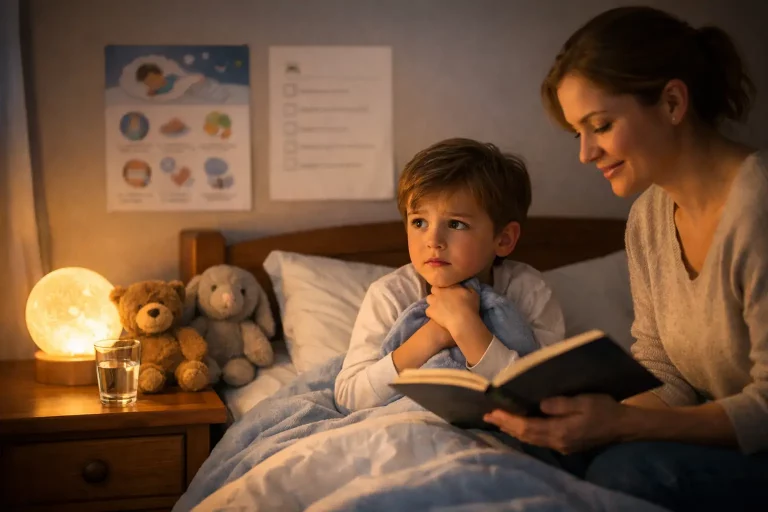
It can be a good option for mild to moderate worries, sleep resistance, confidence dips, exam nerves and emotional overload. It is often most useful when used consistently rather than saved only for a particularly difficult night. A short, familiar recording after pyjamas and before lights out can become a reassuring signal that it is time for the body to rest.
What counselling gives a child
Counselling provides a protected relationship in which a child or young person can explore feelings with a trained professional. Depending on their age and needs, this may involve talking, play, creative activities, stories or practical coping strategies.
Where hypnosis often focuses on calming the nervous system and rehearsing a more helpful inner experience, counselling creates room to understand what sits beneath the worry. A child may be grieving a change at home, struggling with friendships, feeling pressure about school or holding onto a frightening experience. They may need time to be heard without feeling they must protect a parent from their feelings.
A counsellor can help a child name emotions, notice patterns and build ways to communicate their needs. For older children and young people, counselling may also offer a private place to work through confidence, identity, low mood or the disappointment of not receiving the exam grades they hoped for.
When counselling may be the stronger first step
Counselling is often especially valuable when distress is persistent, complicated or affecting everyday life. For example, a child may be refusing school, withdrawing from friends, becoming very angry, having repeated nightmares, or seeming low for several weeks.
It may also be the better starting point when there has been bereavement, bullying, family separation, trauma or a major change that needs careful exploration. A calming audio can still be comforting alongside counselling, but it should not be expected to carry the whole weight of a child’s experience.
The relationship with the counsellor matters greatly. Children may need a little time before they speak freely, and that is completely normal. The right professional will work at the child’s pace and help parents understand how to support progress at home while respecting appropriate privacy.
Children’s hypnosis or counselling: choosing with care
There is no need to make this decision feel like a permanent label. A child might begin with a story and guided audio for bedtime worries, then benefit from counselling if those worries grow or uncover deeper concerns. Another child may have counselling and use relaxation recordings as a gentle way to settle between sessions.
Start by observing the pattern rather than judging the behaviour. Ask yourself when the difficulty began, what seems to trigger it, how long it lasts and how much it interrupts sleep, learning, friendships or family life. Notice, too, what helps even a little. A child who relaxes with stories and responds to imaginative play may welcome hypnosis-based support. A child who is trying hard to explain something confusing or painful may need a therapeutic conversation.
It is also worth asking your child in a simple, pressure-free way. You might say, “Would it feel nice to listen to a calming story together?” or “Would you like someone outside the family to talk to or do activities with when things feel big?” Their answer may be uncertain at first, but being included helps them feel safe and respected.
A gentle home routine can make a real difference
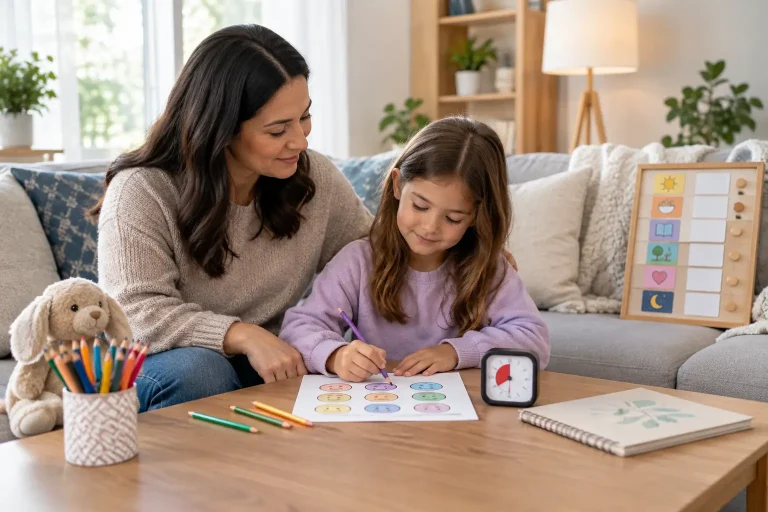
For many families, support starts with making calm more available in ordinary moments. This does not mean trying to solve every worry before bed. It means creating a predictable space where the child’s nervous system learns that rest is possible.
A quiet story, a guided relaxation audio and a few unhurried minutes together can be enough. Keep the language light and reassuring. Instead of asking, “Why are you still worried?”, try, “Your mind has had a busy day. Let’s help it slow down.” Instead of demanding that a child be brave, remind them that bravery can mean noticing a wobbly feeling and taking one small step anyway.
Purpose-built therapeutic stories can be useful because they let children meet difficult emotions at a safe distance. They can recognise themselves in a character who has bedtime worries, feels nervous about exams or is learning to trust their own inner calm. The companion audio then reinforces that feeling through repetition, helping a soothing message become familiar rather than abstract.
Peter Bates Holistic Books is designed around this gentle pairing of story and guided audio, giving families a practical tool they can return to when emotions feel too big for a quick fix.
Safety, training and knowing when to seek more help
Whether you choose hypnosis, counselling or both, look for a professional who is appropriately trained, experienced with children and clear about safeguarding. They should explain what sessions involve, answer your questions plainly and never make grand promises of an instant cure.
Be cautious of anyone who suggests hypnosis can recover hidden memories, replace medical care or resolve serious distress without proper assessment. Good support is collaborative. It respects the child’s consent, involves parents or carers in suitable ways and recognises the limits of the approach.
Speak with your GP, school wellbeing lead or another qualified health professional if your child’s anxiety is severe, their mood is persistently low, they are self-harming, talking about not wanting to be alive, experiencing significant changes in eating or sleep, or unable to manage daily life. In an immediate emergency, seek urgent help through emergency services. Asking for more support is an act of care, not a sign that you have failed.
A child does not need to earn comfort by reaching crisis point. Whether the next helpful step is a calming bedtime story, a guided relaxation, a counsellor’s listening ear or clinical support, the message they receive is the same: your feelings matter, and you do not have to untangle them alone.