
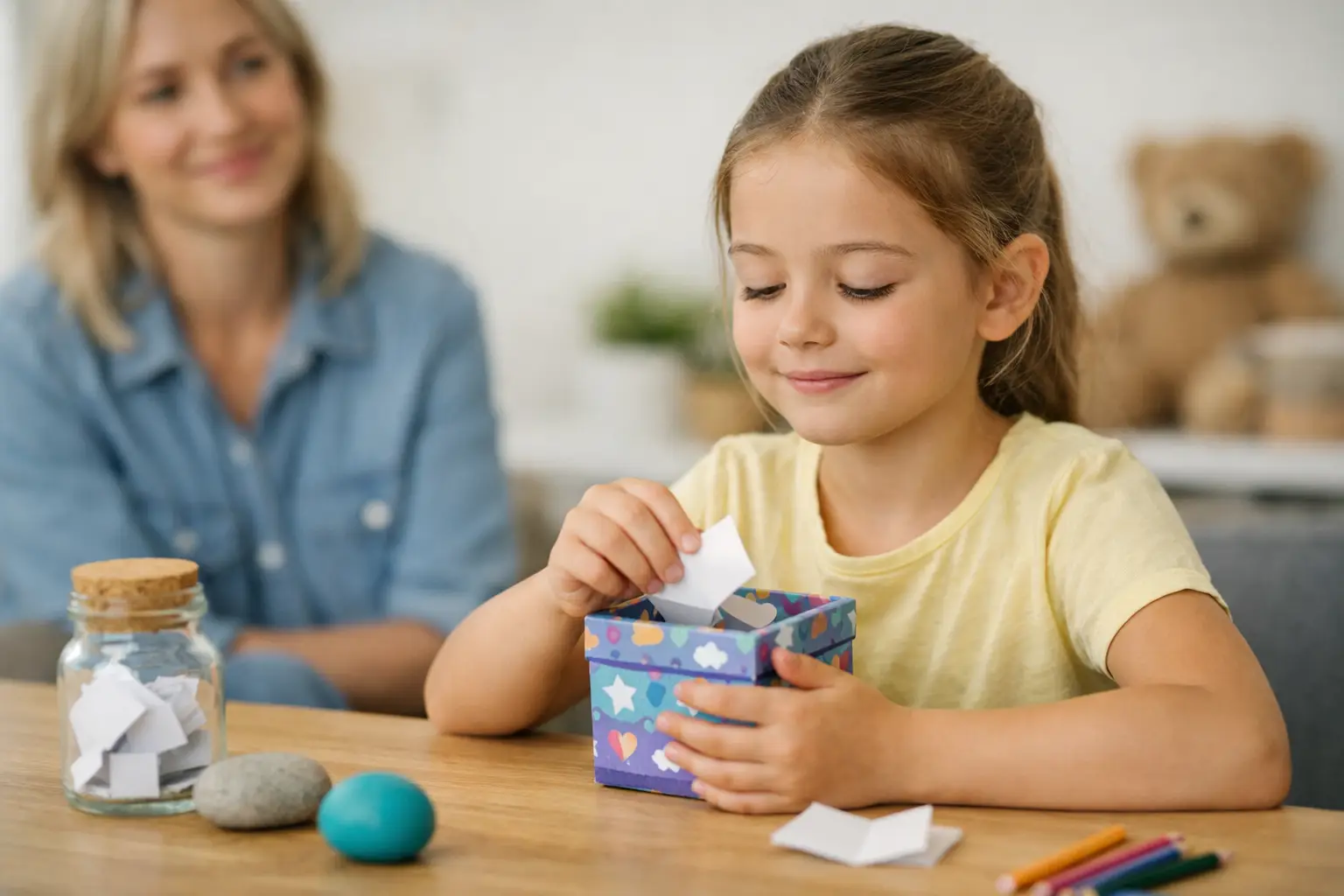
How Children Use Worry Boxes to Feel Calmer
A worry can feel very large when it has nowhere to go. A child may carry it from the school gate to the dinner table, then into bed, even when they cannot quite explain what is wrong. Understanding how children use worry boxes gives parents and carers a gentle way to help them put those thoughts somewhere safe, rather than holding them alone.
A worry box is not about pretending difficult feelings have vanished. It is a simple, reassuring ritual that helps a child notice a worry, express it and experience the relief of setting it down for a while. For many children, especially those who find it hard to talk directly about their feelings, that small act can make big feelings feel more manageable.
What is a worry box?
A worry box is a container chosen or made by a child, where they can place written, drawn or spoken worries. It may be a decorated shoebox, a little tin with a lid, or a purpose-made box kept in a quiet corner of their bedroom. What matters is not how it looks. What matters is that the child understands it as a private, trusted place for thoughts that feel too heavy to carry around.
Younger children may draw a picture of a monster under the bed, a difficult goodbye at nursery, or the thunder they heard last night. Children who can write may add a note: “I am worried I will get my spelling wrong” or “What if Mum is late to collect me?” Some prefer to tell an adult the worry while the adult writes it down. Each approach is valid.
The box offers a helpful physical boundary. A worry can still be real, but it no longer has to take over every moment of the day.
How children use worry boxes in everyday life
The most helpful worry boxes are easy to use and free from pressure. A child should never be told they must find a worry to put inside. Instead, introduce the box when they are calm, explain what it is for, and let them know it will be there whenever something is troubling them.
A simple phrase can help: “Sometimes our minds get busy with worries. This is a safe place to put them until we are ready to look at them together.” This tells the child that their feelings will not be ignored or dismissed.
Many families find that a regular time works well. It might be after school, before a bath, or as part of the bedtime routine. A child can add a worry whenever they need to, but a gentle check-in keeps the box from becoming forgotten or, at the other extreme, becoming a place where worries build up without support.
At the chosen time, sit together and ask whether they would like to open it. Give them a genuine choice. Some days, a child may feel relieved simply knowing the worry is contained. On other days, they may want to read or show you what they have put inside.
When a worry is shared, begin with listening rather than solving. “That sounds really scary” or “I can see why you have been thinking about that” helps a child feel understood. Only then is it useful to explore what might help. Perhaps the worry needs a practical plan, such as laying out PE kit the night before. Perhaps it needs comfort, a cuddle, or a calming story before sleep. Perhaps it is a worry that cannot be fixed straight away, and the kindest response is to practise sitting with it safely.
Why the ritual can ease big feelings
Children are still learning to recognise emotions, put words to them and understand that feelings change. When anxiety stays vague, it can grow. A racing heart, tummy ache or tearfulness may seem to arrive from nowhere. The worry box gently slows this process down.
Naming a worry gives it shape. Drawing it or writing it down creates a little distance between the child and the thought. Instead of “I am scared”, the child can begin to see, “I am having a scary thought about tomorrow.” That distinction may sound small, but it can support emotional regulation and a growing sense of confidence.
The ritual also sends a powerful message: worries are allowed here. Children do not have to be cheerful to protect the adults around them, and they do not need to have the perfect words before asking for help. Over time, this can make open conversation feel more natural.
There is a practical benefit too. Bedtime worries often become louder when the house is quiet and distractions have stopped. Using the box earlier in the evening, followed by a predictable calming routine, may help a child settle with less mental noise. A soothing therapeutic story or guided relaxation audio can then offer a gentler focus for the mind as they prepare for sleep.
Making a worry box feel safe, not frightening
A worry box should never become a punishment or a test of whether a child is coping. Avoid saying, “Put it in the box and stop worrying,” even with the best intentions. This can feel like being sent away with a difficult emotion.
Instead, treat the box as one tool in a wider circle of care. Keep your response calm and curious. Thank your child for showing you a note or picture. Let them decide whether a worry is private, shared with you, or shared with another trusted adult, unless there is a concern about their safety.
It is also wise to be clear about what happens after worries go into the box. Some families choose to read them together once a week. Others look at them daily and then tear up, recycle or store the notes after talking. A child may like to create a second container called a “brave box” or “helpful thoughts box”, where they add things that supported them: “I asked my teacher for help”, “I did sleep after all”, or “Grandad made me laugh.”
This is not about forcing positivity. It helps children notice that worries can be met with support, skills and small moments of courage.
When a worry needs more than a box
Worry boxes can be wonderfully supportive, but they are not intended to carry everything. A child who is persistently distressed, regularly unable to sleep, withdrawing from school or friends, having frequent physical symptoms, or talking about hurting themselves needs further support from a suitable health or education professional.
The same is true if a note reveals bullying, abuse, a fear of someone at home, or anything that suggests the child may not be safe. In these situations, respond calmly, reassure them that telling you was the right thing to do, and seek appropriate help. Do not promise secrecy where safety is involved.
For ordinary daily worries, however, the box can be a valuable bridge between silence and conversation. It gives parents a quieter way in, particularly with children who answer “nothing” when asked about their day.
A gentle routine to try tonight
Choose a box together and allow your child to decorate it if they wish. Explain that it is for worries, questions and uncomfortable thoughts, however small they might seem. Keep paper and pencils nearby, and let them know that drawing, writing or dictating all count.
Before bed, invite them to place one worry in the box. You might then ask, “Would you like to talk about it now, or shall we let it rest until tomorrow?” Follow their lead. End with something settling: slow breathing together, a favourite reassuring phrase, a calming audio, or a story designed to help untangle anxious thoughts.
The aim is not a completely worry-free childhood. Worries are part of being human, and children need to learn that they can move through them with support. A small box, opened with kindness and without judgement, can remind a child of something deeply comforting: their feelings have a place, and they do not have to face them on their own.