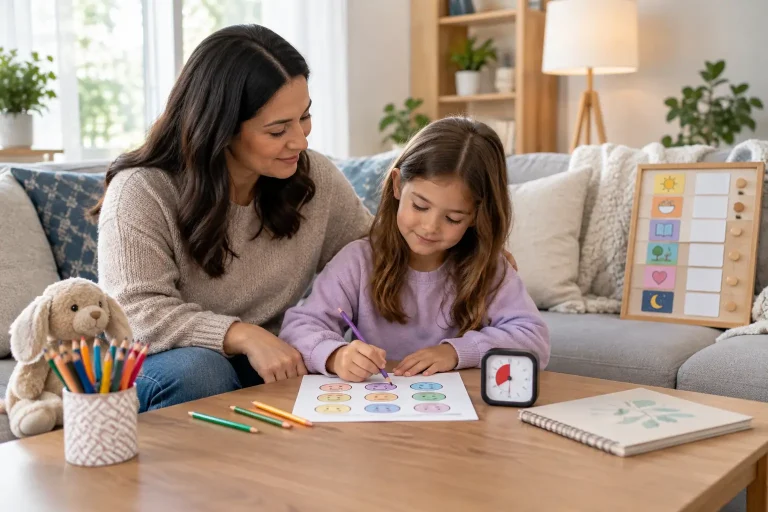
Your Parent Guide to Bedtime Reassurance
The third call from upstairs can be the hardest one. Your child may need a drink, another cuddle, the hall light brighter, or reassurance that the sound outside is nothing to worry about. This parent guide to bedtime reassurance is for those tender, tiring evenings when a child’s worries grow louder as the house grows quiet.
Bedtime fears are not usually a sign that you have done something wrong. For many children, the end of the day is when busy thoughts finally have space to surface. A frightening image, a friendship wobble, a change at school or simply a strong imagination can all become a very big feeling in the dark. Gentle, steady reassurance can help them untangle those worries and begin to trust that bedtime is a safe place to rest.
Why bedtime can make worries feel bigger
During the day, children have distractions: lessons, play, conversation, food, movement and familiar routines. At night, there is less to focus on. Their mind may replay something unsettling or begin to imagine what might happen tomorrow. Younger children may struggle to separate a thought from a real danger, while older children may worry about school, friendships, family changes or whether they will be able to sleep at all.
A tired child also has fewer emotional resources available. This is why a small disappointment can turn into tears at bedtime, or why a child who has seemed perfectly settled all day suddenly says they are frightened. They are not being difficult or trying to delay sleep in a calculated way. They are asking, in the only way they can, for help finding their inner calm.
Reassurance works best when it offers both connection and confidence. Your child needs to feel heard, but they also need to learn that worries can visit without taking over the whole night.
Reassure the feeling, not the fear
It is natural to say, ‘There is nothing to be scared of.’ Yet when a child feels frightened, that phrase can leave them feeling misunderstood. Try naming the experience instead: ‘The dark is making that worry feel very big tonight,’ or, ‘You wish you could be completely sure that everything will be all right.’
Then add a calm, truthful reassurance. You might say, ‘You are safe in your room. I am nearby, and we have checked what we need to check.’ This acknowledges their feeling without feeding a long search for certainty. Avoid repeatedly checking under the bed or searching the room for dangers if this has already been done. A brief, predictable check can be comforting; endless checking can quietly teach a child that they need proof before they can feel safe.
Your manner matters as much as your words. A low voice, a slower pace and a hand resting gently on their back tell their nervous system that there is no emergency. Children often borrow calm from the adults around them before they can create it for themselves.
A parent guide to bedtime reassurance that builds confidence
The most helpful bedtime support is usually simple and repeatable. It does not need to be elaborate, and it does not need to work perfectly on the first evening. Consistency gives a child something familiar to lean on when their thoughts feel unsettled.
Start by creating a short winding-down period before the final goodnight. This might include washing, pyjamas, a drink of water, a story and a few quiet minutes together. Keep the order much the same each night where possible. Predictability can make bedtime feel less like a sudden separation and more like a gentle path towards sleep.
It helps to talk about worries before your child is exhausted. Earlier in the evening, ask a light, open question such as, ‘Was there anything tricky about today?’ or, ‘Is there a thought you keep getting stuck on?’ There is no need to force a conversation. Sometimes a child will share more while drawing, in the bath or sitting beside you than they will when asked directly.
If a worry arrives at bedtime, give it a small container rather than a large stage. You could say, ‘Let’s give that worry one minute of our attention, then we will help your body settle.’ For some children, it is comforting to draw the worry, place it in a special box, or tell it that it can wait until morning. The aim is not to pretend the worry does not exist. It is to show your child that they are bigger than the worry.
Use a familiar reassurance script
When everyone is tired, it can be difficult to find the right words. A short script prevents bedtime conversations from becoming longer and more anxious each night. It could sound like this: ‘I can see you are worried. You are safe, your body is ready to rest, and I will check on you in a few minutes.’
If you promise to check back, do so. Begin with a short interval that feels manageable, then slowly lengthen it over several evenings as your child settles. Keep each check-in quiet and brief. A warm smile, a tucked-in blanket and the same reassuring phrase are often enough. The message is, ‘I am here, and you can do this.’
For a child who repeatedly comes downstairs, calmly walk them back with as little discussion as possible. This is not coldness. It is a kind boundary. Long conversations, extra games or new snacks can accidentally make returning downstairs feel more rewarding than staying in bed. Offer comfort, repeat the familiar words, and guide them back without blame.
Bring the body into the calming process
Worry is not only a thought. It can show up as a tight tummy, a racing heart, restless legs or a need to keep moving. Helping the body soften can make reassurance easier to receive.
Invite your child to place a hand on their tummy and notice it rising and falling. You might breathe together slowly, perhaps imagining that you are smelling a favourite flower and gently blowing a feather across the room. Keep it playful for younger children and straightforward for older ones. Some children prefer to listen quietly rather than join in, and that is fine too.
A soothing story or guided relaxation audio can also become a helpful part of the routine. Therapeutic storytelling gives a child a safe distance from their own feelings: they can hear a character meet a worry, find courage and settle into calm without having to explain everything about themselves. Gentle companion audio can reinforce the same message through a relaxed, unhurried voice. It is most useful when used regularly, not only on the most difficult nights.
What to avoid when reassurance is needed
Try not to turn bedtime into a debate about whether a fear is sensible. Logic rarely settles a child whose body is already on high alert. It is also worth limiting frightening programmes, intense games and unsettling online content close to bed, even for children who insist they are not affected by it.
Be cautious with absolute promises such as, ‘Nothing bad will ever happen.’ Children notice that adults cannot control everything. A more secure message is, ‘Right now, you are safe. If something worries you, there are adults who will help.’ This is honest, grounding and quietly empowering.
It may be tempting to stay until your child is fully asleep every night. Sometimes this is exactly what is needed during illness, a major change or a particularly difficult patch. As a long-term pattern, however, it can make it harder for some children to practise settling independently. The gentlest approach is often to offer a little less help over time: sit beside the bed, then near the door, then make brief check-ins. Go at a pace your child can manage.
When bedtime worries need extra support
Many bedtime worries ease with patient routines and loving reassurance. However, seek advice from a GP, school wellbeing lead or qualified child mental health professional if fear is persistent, intensifying or affecting daytime life. Extra support is especially important if your child is regularly unable to attend school, has frequent panic-like symptoms, is withdrawing from usual activities, or speaks about hurting themselves or not wanting to be here.
Professional support and home-based calming tools can sit alongside one another. You know your child best, and asking for help is a caring response, not an overreaction.
Tonight, your child does not need you to make every worry disappear. They need your calm presence, a few dependable words and the growing belief that big feelings can be felt safely, softened gently and carried through to morning.