
A Caregiver Guide to Panic Signs in Children
A child may suddenly say they cannot breathe, clutch their tummy, cry uncontrollably or insist that something terrible is about to happen. For a parent or carer, that moment can feel frightening too. This caregiver guide to panic signs is here to help you recognise what may be happening, respond with steady reassurance and know when further support is needed.
Panic can look different from one child to the next. It is not naughtiness, attention-seeking or a sign that they are failing to cope. It is the body’s alarm system switching on very strongly, even when there is no immediate danger. Your calm presence can help them begin to feel safe again.
What panic can feel like for a child
A panic episode often comes on quickly and may peak within minutes, although the worry surrounding it can linger. A child may not have the words to explain the sensation. Younger children might simply become clingy, tearful or desperate to leave a place. Older children may describe feeling unreal, trapped, dizzy or convinced that they are about to faint.
The physical feelings are very real. A racing heart, shaky hands, sweating, nausea, tightness in the chest and fast breathing can all be part of panic. Because these sensations are so intense, a child may fear that they are seriously ill. That fear can then make the body’s alarm response grow louder.
It can help to remember that panic is not usually dangerous, though it feels deeply unpleasant. The aim in the moment is not to talk your child out of their feelings or make every sensation disappear immediately. It is to help them ride out the wave with safety, connection and simple steps.
Caregiver guide to panic signs: what to notice
A single tearful moment does not necessarily mean panic. Look for a pattern of intense fear alongside strong body sensations or an urgent need to escape. Your child may say things such as, “I can’t do this,” “I’m going to be sick,” or “Something is wrong with me.” They may pace, freeze, cling tightly to you, breathe rapidly or become unable to take in what you are saying.
Panic can appear in predictable situations, such as at bedtime, before school, during tests, in busy shops or after a difficult social experience. It can also seem to arrive without an obvious trigger. Keeping a gentle note of when it happens, what came before it and what helped afterwards can reveal useful patterns without turning your child’s feelings into a problem to be studied.
For some children, anxiety shows itself between episodes too. They may avoid sleepovers, seek repeated reassurance, worry about being away from home or complain of frequent headaches and tummy aches. Avoidance can bring short-term relief, but it can gradually make the feared situation feel bigger. Small, supported steps are often kinder and more helpful than forcing a child through it or avoiding everything altogether.
What to do during a panic episode
Begin with your own breath. Children often borrow the emotional tone of the adult beside them. Speak slowly, soften your voice and use few words. A long explanation can be hard to process when their nervous system is on high alert.
You might say, “You are safe. This feeling is scary, but it will pass. I am here with you.” Avoid promises you cannot make, such as “You will never feel this again,” or phrases that can sound dismissive, such as “Calm down” or “There is nothing to worry about.” Their body believes there is danger, so they need steadiness before they can take in reassurance.
Encourage a slower out-breath rather than telling them to take huge breaths, which can sometimes make dizziness worse. You could breathe together gently: in for a comfortable count, then out a little longer, as if slowly cooling a spoonful of hot tea. If breathing exercises make your child more aware of uncomfortable sensations, shift to grounding instead.
Grounding brings attention back to the room and the present moment. Invite them to press their feet into the floor, hold a cool drink, name three things they can see or describe the colour of an object nearby. Keep it simple. The purpose is not to distract them from their feelings completely, but to remind their body that this moment is safe.
If they want to leave a noisy or crowded setting, move somewhere quieter if possible. Stay nearby rather than rushing to solve the cause. Once the strongest part has passed, offer water, a familiar blanket or a quiet activity. Some children prefer a cuddle; others need a little physical space. Follow their lead where you can.
Helping after the wave has passed
When your child is calm enough to talk, treat the episode with warmth rather than interrogation. You could say, “That was a big feeling. What do you think your body was trying to tell us?” They may not know, and that is all right. Naming even one part of the experience can make it less mysterious next time.
Help them build a short, believable coping phrase. “My body is having a false alarm,” may suit an older child. A younger child may prefer, “Worries are loud, but I am safe.” Practising this during a calm moment makes it easier to remember when feelings are big.
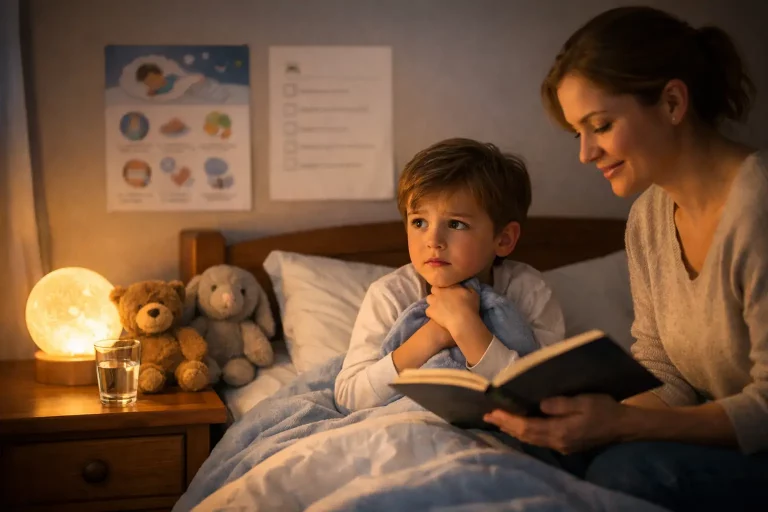
A predictable wind-down routine can be particularly supportive where panic appears around sleep. Dim lights, a familiar story, gentle breathing or calming audio can signal safety to a busy mind. Therapeutic stories and guided relaxation can give children a comforting language for worries while helping their bodies settle. At Peter Bates Holistic Books, this combination is designed to fit naturally into home routines, without making a child feel as though they are being tested or treated.
Try not to make recovery from panic the only focus of family life. Continue to notice courage, kindness, playfulness and ordinary successes. If a child managed to stay in the room for two more minutes, told you they were worried or used a calming tool, that is meaningful progress. Confidence grows through repeated experiences of, “I felt frightened, and I got through it.”
When to seek further help
Although panic is common and support at home can make a real difference, you do not have to manage alone. Speak with your GP, health visitor, school nurse or your child’s school if episodes are frequent, getting worse, interfering with school, sleep or friendships, or causing your child to avoid everyday life. They can help you consider whether anxiety support, counselling or another assessment would be useful.
Seek urgent medical help if chest pain, breathing difficulty, fainting, confusion or other physical symptoms are new, severe or do not settle, especially if you are unsure whether this is panic. It is always reasonable to have concerning symptoms checked. If your child talks about hurting themselves, not wanting to be here, or you feel unable to keep them safe, seek urgent professional support straight away.
There may also be practical factors worth exploring with a professional, including sleep loss, bullying, neurodiversity, bereavement, family change or pressure around learning. Panic is rarely a child being “too sensitive”. It is often a sign that their inner world needs more support, safety and understanding.
A calmer path, one small step at a time
You cannot prevent every anxious moment for your child, nor do you need to have perfect words. What matters most is the repeated message beneath your response: big feelings can be faced, bodies can settle and help is available. With patient routines, gentle practice and the right support, children can learn to untangle the worries and trust their own growing inner calm.