
Exam Wellbeing Book Review for Anxious Learners
When revision cards begin appearing on the kitchen table and your child suddenly says their tummy hurts on a school morning, exam pressure can feel much bigger than the test itself. This exam wellbeing book review looks at what a genuinely supportive resource should offer: not more pressure to perform, but a gentle way to untangle the worries that can make revision, sleep and confidence feel difficult.
For many children and young people, exams bring a very particular kind of anxiety. They may understand the work, yet still freeze when they think about the paper. They may revise for hours but worry they have done nowhere near enough. Some become tearful or irritable, while others go quiet and insist they are fine. A wellbeing book cannot remove every challenge of exam season, but the right one can give a child a calmer place to begin.
Exam wellbeing book review: what makes it helpful?
The most useful exam wellbeing books do not treat a child as a set of grades waiting to be improved. They recognise the whole person behind the revision timetable: the child who is tired, worried about disappointing people, comparing themselves with friends, or carrying big feelings they cannot quite explain.
A thoughtful book gives those feelings kind, understandable language. Instead of telling a reader simply to “stop worrying”, it may show a character facing similar fears and finding small ways to feel safer. This matters because children often find it easier to talk about a character’s feelings before speaking about their own. A story can create enough emotional distance for an honest conversation to start.
The strongest resources also avoid promising that calm means never feeling nervous. A little nervous energy can help us focus and prepare. The difficulty comes when worry becomes so loud that it interrupts sleep, makes concentration hard, causes upset at home, or leaves a child believing one exam will decide their whole future. A good wellbeing book helps to soften that intensity, while reminding the reader that they are more than a result.
A story-based approach feels less like another lesson
During exam periods, children are already surrounded by instructions. Revise this topic. Complete that paper. Remember this date. Even well-meant wellbeing advice can feel like one more task to get right.
Therapeutic storytelling offers a gentler route. Rather than asking a child to analyse every thought, it invites them into a reassuring story. They can meet a character who notices their racing thoughts, learns to pause, and begins to trust their own ability to cope. The message reaches them without a lecture.
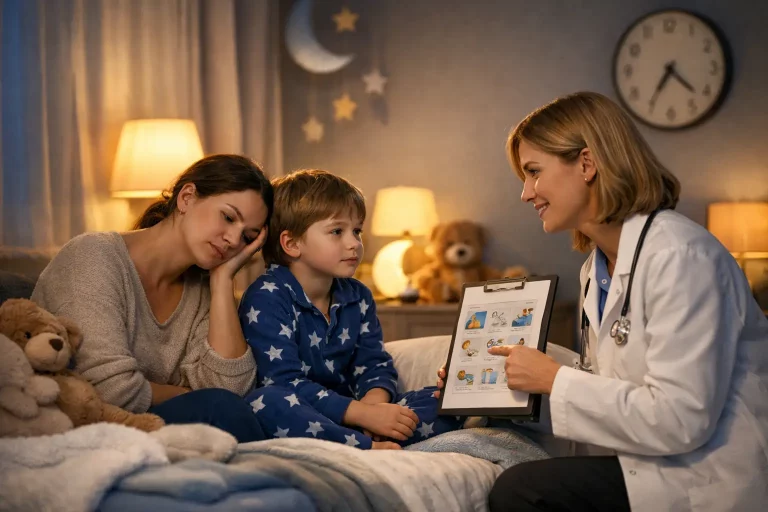
This approach can be particularly helpful for younger children preparing for school assessments, entrance tests or SATs, as well as older pupils who find direct conversations uncomfortable. Reading together at bedtime can make space for questions that may not come up in the rush of the school day: “Do you ever worry your mind will go blank?” or “What would help your body feel calmer before a test?”
It is not a replacement for revision support where a child needs help with the subject itself. Nor is it a substitute for professional care when anxiety is severe or persistent. But alongside practical study help, a well-chosen story can support the emotional side of learning – the part that is so often overlooked.
Why calming audio can deepen the support
A book can begin a reassuring conversation. Companion audio can help a child practise the feeling of settling themselves when words feel hard to access.
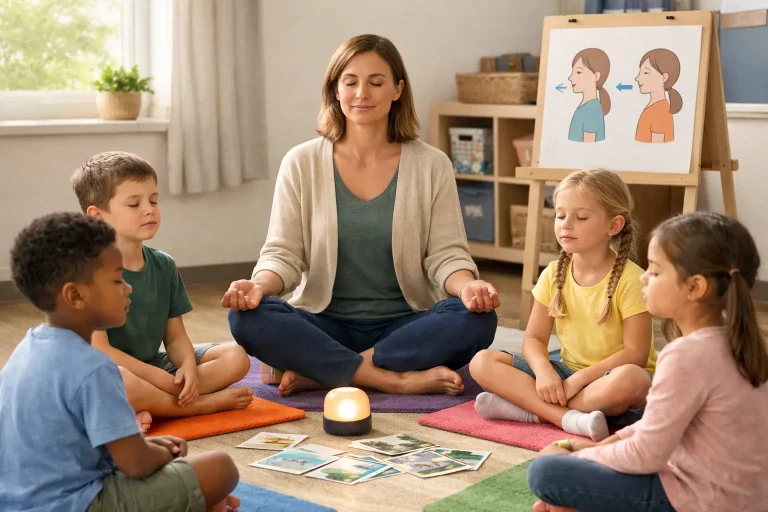
Gentle guided audio, including relaxation, meditation or carefully designed hypnosis techniques, can be especially useful before bed, after school or ahead of an exam. These are often the moments when worries gather pace. The body may be exhausted, but the mind is still rehearsing everything that could go wrong.
Listening regularly creates a familiar calming routine. A child does not have to find the perfect answer to their thoughts. They can simply get comfortable, listen, breathe naturally and allow the guidance to lead them towards a quieter inner space. Over time, this can give them a practical association to return to: a voice, image or phrase that reminds them they can pause.
There is a trade-off to keep in mind. Some children love audio immediately, while others prefer to read independently or talk things through. Older teenagers may want more privacy and may choose to listen with headphones. The important thing is choice. Calm cannot be forced, and a supportive tool works best when it feels like an invitation rather than another demand.
The messages children most need to hear
An effective exam wellbeing resource quietly repeats a few truths that are easy to lose sight of under pressure. Preparation matters, but perfection is not required. Feeling worried does not mean they are going to fail. A difficult paper is a moment, not a definition of who they are. And if results are not what they hoped for, there will still be caring adults, choices and next steps.
These messages are not empty reassurance. They help challenge the all-or-nothing thinking that often sits beneath exam stress. A child may believe, “If I do badly, everyone will be disappointed,” or “If I cannot answer every question, I have failed.” A compassionate story can introduce a steadier perspective: doing their best can include asking for help, taking breaks and trying again after a wobble.
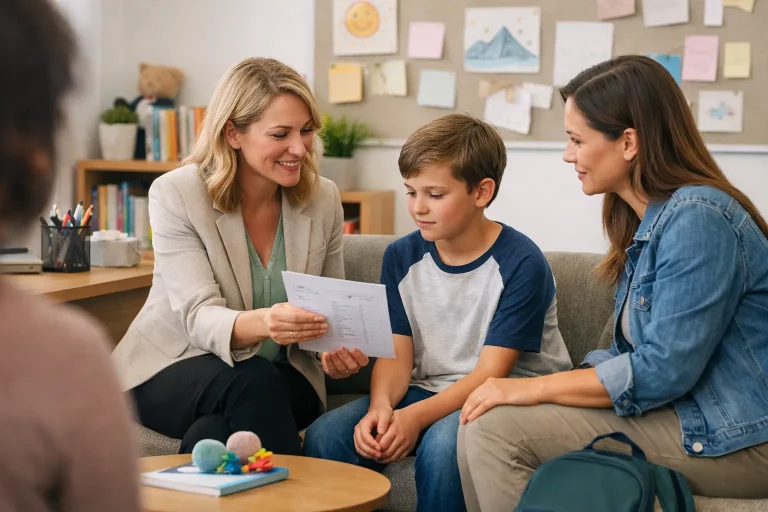
For parents and carers, this can be just as reassuring. It is painful to watch your child struggle, especially when you want to fix the worry for them. Often, the most helpful response is not finding the perfect speech. It is offering a calm presence, listening without rushing to correct their feelings, and making room for small moments of comfort.
Using an exam wellbeing book at home
There is no need to turn a wellbeing book into a formal programme. Read a little together after tea, or make it part of the bedtime routine when the day has begun to slow down. If your child is revising, it may help to use the story or audio after a study session, so their mind has a clear signal that work is finished for now.
Keep conversations light and specific. You might ask which part of the character felt familiar, what their worries sound like, or what helps them feel one per cent calmer. A child who shrugs or changes the subject is not necessarily rejecting the support. They may be taking it in quietly. Leave the door open and return to it another day.
It can also help to protect a few ordinary parts of family life during exam season. A short walk, a favourite meal, a screen-free wind-down or an earlier bedtime can all remind a child that home is still a safe place, not an extension of the classroom. These small anchors often matter more than another hour spent revising while overwhelmed.
Who may benefit most?
This kind of resource is likely to suit children who are prone to overthinking, struggle to switch off at night, become upset before tests or put enormous pressure on themselves. It may also support young people who have worked hard but fear disappointing others, or those facing the emotional aftermath of grades that did not match their hopes.
Peter Bates Holistic Books is built around this kind of gentle, home-based support, pairing purposeful stories with therapeutic audio so families can return to calming tools whenever they are needed. The value is not in a quick fix. It is in offering a repeatable, emotionally safe way for children to meet stressful moments with a little more steadiness.
If your child’s anxiety is stopping them from attending school, affecting eating or sleep for a sustained period, or leaving them deeply distressed, speak with their school, GP or an appropriate mental health professional. A book can be a comforting companion, but children deserve extra support when worries are taking over.
Exams will pass, even when they feel all-consuming. What can remain is something more valuable: the knowledge that big feelings can be met with kindness, that help is available, and that their worth was never waiting at the bottom of a results sheet.