Sleep Audio or White Noise for Children?
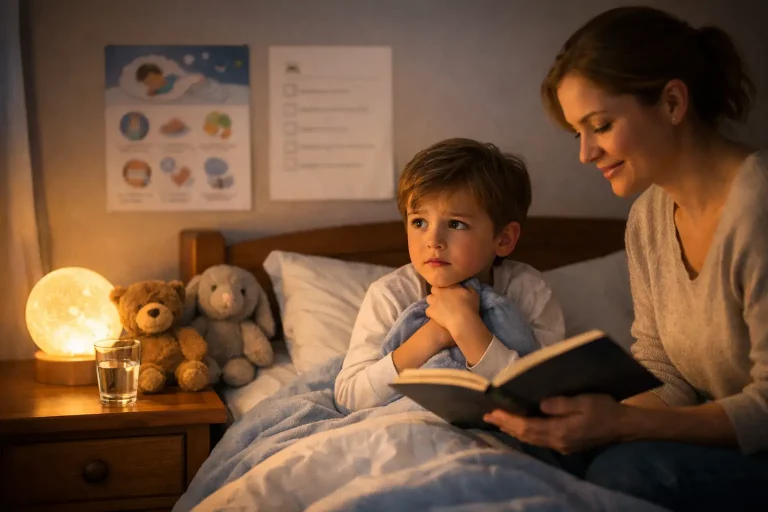
A child may be tucked in, cosy and clearly tired, yet still unable to switch off. The house feels too quiet for one child, too noisy for another, and the thoughts that were manageable at teatime can grow much louder at bedtime. When parents consider sleep audio or white noise, they are often looking for one small, reassuring part of the routine that helps their child feel safe enough to rest.
Both can be useful, but they do different jobs. The best choice depends on what is keeping your child awake: sounds outside their room, a busy mind, separation worries, or big feelings that have not yet found their way out.
What white noise does at bedtime
White noise is a steady, neutral sound that softens sudden changes in the environment. Think of a gentle fan, rainfall-like sound or an even hush. Rather than demanding attention, it creates a consistent background layer that can make a barking dog, a passing car or a sibling moving about seem less sharp.
For some children, especially those who wake easily when the household or neighbourhood stirs, this consistency is comforting. Their brain has fewer unexpected sounds to notice, so it may be easier to remain settled.
White noise is not, however, a cure for every sleep difficulty. It does not directly help a child understand the worry about tomorrow, process an upsetting day at school or build confidence in sleeping independently. If anxious thoughts are the main obstacle, an unchanging sound may feel pleasant but not give their mind enough gentle direction.
When white noise may suit your child
White noise can be a sensible option when your child is generally calm at bedtime but is disturbed by environmental noise. It may also help during travel, unfamiliar overnight stays or periods when the normal household routine is a little noisier than usual.
Some children find true white noise rather harsh or hissy. In that case, a softer, steady sound such as rain, waves or a low fan-like sound may be more soothing. The aim is not to find the most powerful noise. It is to create a quiet sense of predictability.
How sleep audio supports a worried mind
Sleep audio is broader than background sound. It may include a calm story, guided relaxation, breathing prompts, meditation or gentle therapeutic language designed to help a child move from alertness towards inner calm.
This can be especially helpful when bedtime is where worries gather. A child may be replaying a friendship difficulty, feeling nervous about school, worrying about an upcoming test or simply struggling with feelings they cannot yet name. The right audio gives them something safe to focus on, replacing the pressure to “go to sleep now” with an invitation to rest.
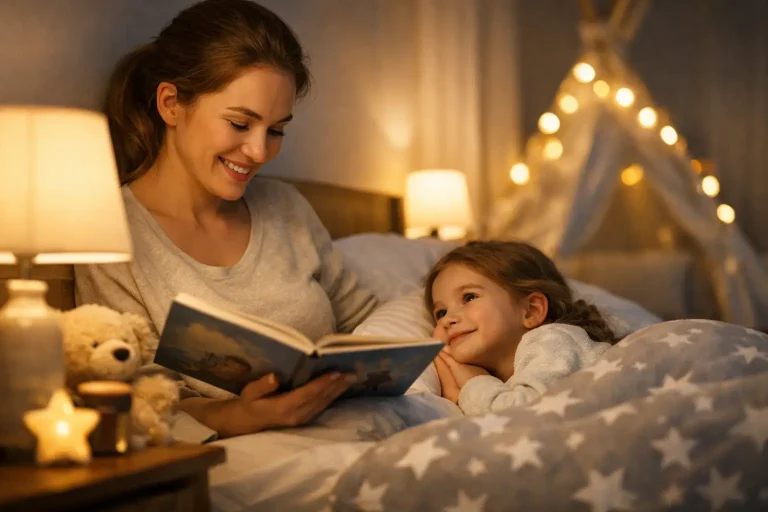
A soothing voice and a familiar structure can become a reliable cue: it is time to let the day go. Over repeated evenings, the routine itself can feel reassuring. This is one reason story-based audio can be so valuable for children. It meets them in a form they understand naturally, without asking them to explain every big feeling at the end of a long day.
Look for audio that is made with children in mind
Not all relaxation recordings are suitable for young listeners. Adult sleep content may be too long, use language that feels unfamiliar, or focus on concerns that do not fit a child’s world. Fast-paced stories, cliff-hangers and energetic music can also make settling harder, even if they are enjoyable at other times.
Choose sleep audio with a slow, warm delivery, simple language and a clear emotional purpose. It should feel safe rather than intense, with no surprises, frightening imagery or pressure to perform relaxation correctly. Children do not need to be told to empty their minds. They need gentle permission to soften, imagine and rest.
For families seeking a more purposeful approach, therapeutic stories and guided audio can help untangle bedtime worries while supporting emotional regulation beyond the bedroom. Peter Bates Holistic Books creates this kind of companion audio to work alongside stories, giving children a familiar, repeatable way to settle.
Sleep audio or white noise: which is better?
Neither is automatically better. White noise is usually most helpful for managing the sounds around a child. Sleep audio is often more helpful for managing what is happening within them.
If your child says, “I can hear everything,” wakes at every creak or is unsettled by noises from outside, start with a gentle, continuous background sound. If they delay bedtime with questions, become tearful once the lights are low, or say they cannot stop thinking, calming sleep audio may be the kinder first choice.
There is also room for a combination, used thoughtfully. Very soft background sound can sit underneath a short guided story or relaxation track, particularly in a noisy home. Avoid layering several tracks, musical playlists and bright devices at once. Too much sound can become another source of stimulation.
Your child’s response matters more than a perfect category. A sound that settles one child may irritate another. Give a choice between two gentle options, then observe what happens over several nights rather than judging it after one difficult bedtime.
How to introduce bedtime sound without creating pressure
The most helpful audio is part of a wider wind-down, not a last-minute fix after an exhausting battle. Begin around the same time each evening where possible. Dim the lights, move screens away, and let the audio be one predictable step after pyjamas, teeth and a quiet chat.
Keep the first few sessions simple. You might say, “This is our resting time. You do not have to fall asleep straight away. We can just listen and let your body get cosy.” This takes away the sense that sleep is a test they are failing.
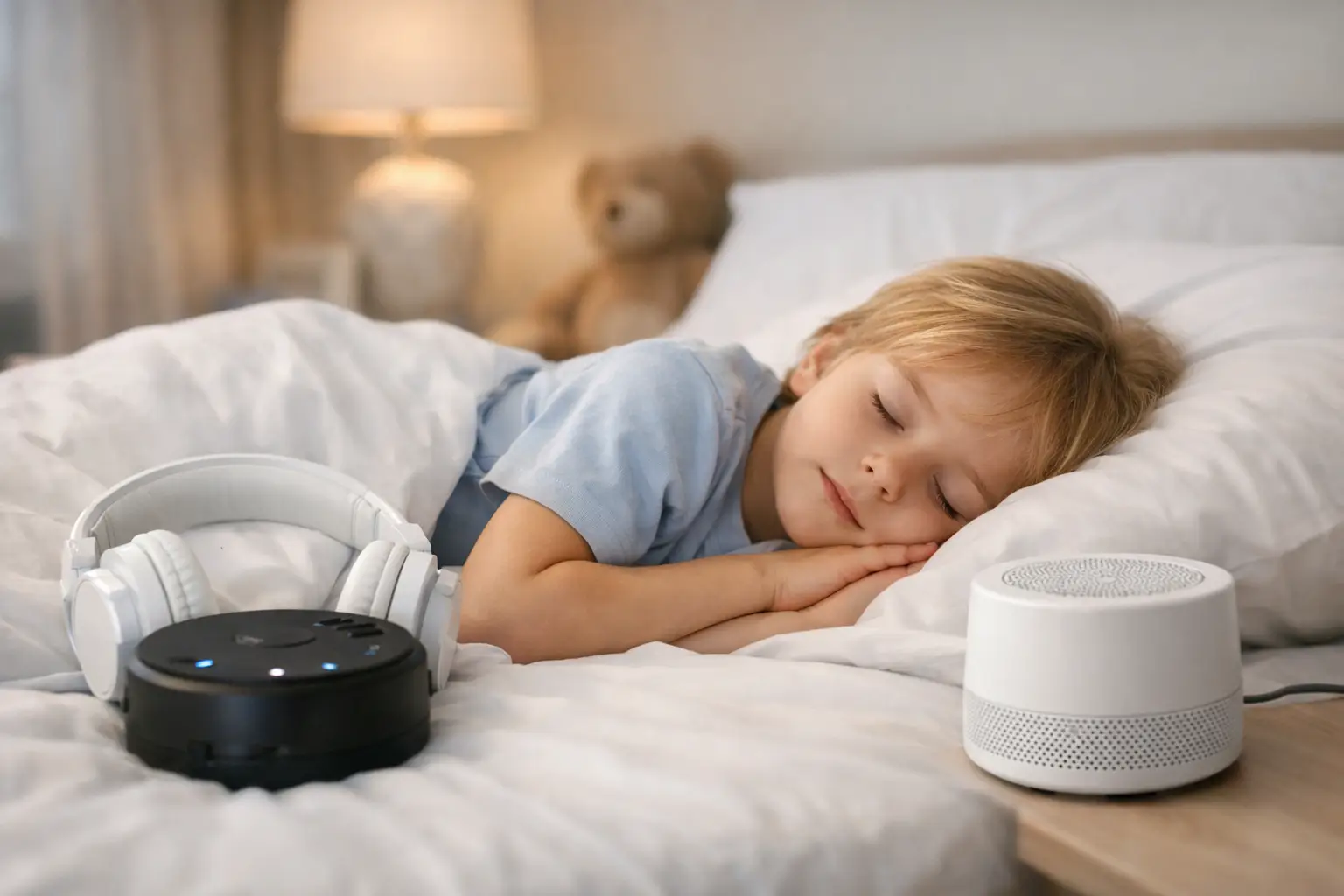
Let the audio play from a device placed away from the bed rather than through headphones or earbuds. Set the volume low enough that it feels like someone speaking gently from nearby. If you need to raise your voice to be heard over it, it is too loud. A timer can be useful for white noise or a longer recording, although some children prefer a sound that continues quietly through the night.
It is also wise to keep mobile phones face down and out of reach. Notifications, glowing screens and the temptation to choose another track can undo the calm you have created. A dedicated speaker is helpful, but a mobile phone can work if it is used only as the source of sound and kept on a suitable setting.
Notice what the bedtime struggle is telling you
Sleep support works best when it is paired with curiosity. If a child repeatedly needs a parent to stay for a long time, wakes distressed, or becomes increasingly worried as bedtime approaches, the audio may be one helpful layer rather than the whole answer.
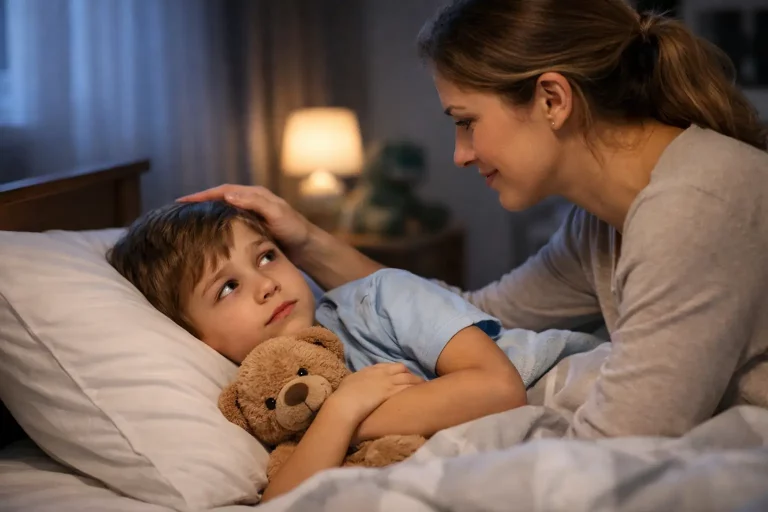
Make space earlier in the evening for a small check-in. A simple question such as, “Was there anything heavy or tricky about today?” can give worries somewhere to go before the pillow arrives. Younger children may prefer to draw their worry, tell it to a cuddly toy or choose a colour for how they feel.
Be patient with patterns that have built over weeks or months. A new sound may offer relief quickly, but confidence around sleep often grows through repetition: the same gentle words, the same safe routine, and the growing experience of having settled before.
If your child snores loudly, has pauses in breathing, seems unusually sleepy during the day, or their sleep difficulties are causing significant distress, speak with a GP or another qualified health professional. Bedtime audio can be wonderfully supportive, but it should not replace assessment where there may be a health concern.
A peaceful bedtime does not have to mean a perfectly silent room or a child who falls asleep instantly. Sometimes it begins with one familiar sound, one calmer breath and the quiet reassurance that they do not have to carry the day’s worries into the night alone.