
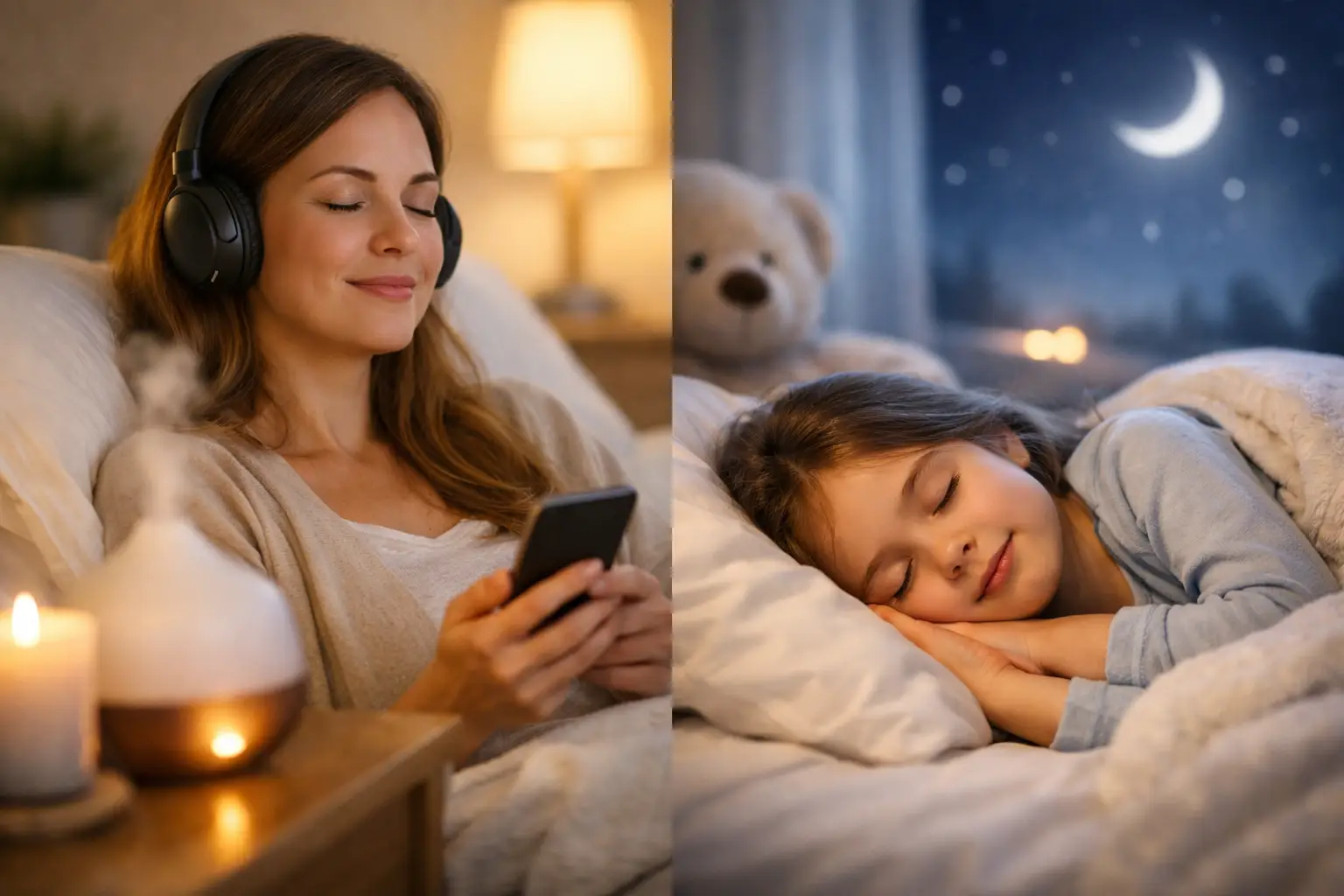
Sleep Story or Meditation for Better Bedtimes
Some bedtimes feel as though the day has finally gone quiet, yet a child’s mind is only just getting louder. The lights are low, the pyjamas are on, and still the worries begin – fear of the dark, replayed school moments, a body that cannot seem to switch off. In that moment, many parents ask the same question: is a sleep story or meditation the better way to help a child settle?
The honest answer is that both can help, but they do not help in quite the same way. A child who resists sleep is not always resisting sleep itself. Often they are carrying tension, overstimulation, uncertainty, or big feelings they have not yet managed to process. The most effective bedtime support meets that emotional need first, rather than simply asking a child to close their eyes and drift off.
Sleep story or meditation – what is the difference?
A sleep story gives the mind somewhere safe to go. It offers gentle narrative, calming imagery, and a sense of emotional containment. For many children, this feels natural because stories are already part of family life. A soothing plot can soften bedtime worries by shifting attention away from stress and into a more settled inner world.
Meditation works differently. Rather than following a character or storyline, it usually invites the child to notice their breathing, relax their body, or imagine peaceful sensations. This can be very effective, especially for children who are physically tense, mentally busy, or sensitive to overstimulation. Meditation tends to be quieter and simpler, with less external structure.
Neither is automatically better. It depends on what is keeping your child awake.
If your child fears being alone with their thoughts, a story may feel more comforting. If their body seems wired and restless, meditation may help them release that activation more directly. If they struggle with both, a combination of story and guided calming can be especially supportive.
When a sleep story is the better fit
Some children need bedtime to feel held, not just quiet. A sleep story can be wonderfully effective for children who need reassurance, imagination, and a gentle emotional bridge between the day and sleep.
This is often the case with younger children, or with children who have vivid imaginations that become more active at night. The same imagination that fuels fears can also become part of the solution. A carefully written story can help untangle the worries by giving the mind a kinder focus. Instead of thinking about monsters, school pressure, or separation anxiety, the child begins to picture soft landscapes, safe journeys, and calm outcomes.
Stories can also help children who do not respond well to direct instructions. Some children hear “relax” and immediately tense up. A story is less demanding. It does not require them to perform calmness. It lets calmness arrive more naturally.
There is also a therapeutic advantage in storytelling when the content has been created with emotional wellbeing in mind. A well-constructed sleep story is not just background entertainment. It can quietly support confidence, safety, emotional regulation, and release. That is why purpose-built wellbeing stories often have a deeper effect than a random bedtime tale.
When meditation may work better
Meditation can be especially helpful for children whose main difficulty is nervous system overload. If a child has had a stimulating day, is buzzing after screens, or seems physically unable to settle, guided meditation may provide a clearer path into rest.
The strength of meditation is that it helps a child notice what is happening inside their body and gently shift it. Slower breathing, progressive relaxation, and calming visualisation can all reduce that sense of inner speed. For children who feel tummy knots, racing hearts, or restless legs at bedtime, this can be a real relief.
Meditation may also suit older children and young teens, particularly if they are dealing with exam stress, social worries, or that familiar late-night overthinking. A story can still help, of course, but some older children prefer something that feels less babyish and more like a practical tool. A calm meditation can meet that need without feeling clinical.
That said, meditation is not right for every child. Some children become frustrated if they are asked to focus on their breath. Others find silence uncomfortable. For anxious children, too much inward focus can occasionally make worries feel louder at first. This does not mean meditation is wrong, only that the style and timing need care.
Why the choice is not always either-or
Parents often feel they must choose one approach, but bedtime support does not have to be rigid. In practice, the most effective routines are often layered. A gentle story may help a child feel emotionally safe, while a short guided relaxation helps their body follow.
This is why therapeutic audio paired with story-based support can be so powerful. One element speaks to the imagination and emotions. The other helps settle the nervous system more directly. Together, they create a repeatable bedtime cue that children begin to associate with comfort, safety, and sleep.
At Peter Bates Holistic Books, this combination sits at the heart of the approach because children rarely struggle in just one way. A child may be worried and overtired, emotionally overwhelmed and physically restless, comfort-seeking and resistant all at once. Support works best when it understands that complexity.
How to choose between a sleep story or meditation at bedtime
The simplest place to start is by noticing your child’s pattern rather than focusing on a perfect method. Ask yourself what bedtime looks like on a hard evening.
If your child becomes clingy, asks for repeated reassurance, or starts talking about fears and worries, a sleep story is often the gentler first step. It creates connection and safety without forcing direct discussion.
If your child wriggles, cannot stop moving, complains they are not tired, or seems stuck in a revved-up state, meditation may help settle the body more effectively.
If your child says they are tired but keeps thinking, then the answer may depend on the flavour of those thoughts. Worry-based thoughts often respond well to a story with a soothing emotional arc. Fast, jumbled mental activity may respond better to slow breathing and guided relaxation.
It also helps to think about age, temperament, and familiarity. A three-year-old may relax beautifully into a story but feel confused by abstract meditation prompts. A twelve-year-old may appreciate a more grown-up relaxation track. A highly imaginative child may love visual journeys. A more literal child may prefer simple body-based guidance.
Making either approach more effective
Whether you choose a sleep story or meditation, the surrounding routine matters. Children settle more easily when the same cues appear in the same order. That does not mean creating a military timetable. It means making bedtime feel predictable and emotionally safe.
A calmer environment helps. Softer lighting, reduced screen use before bed, and a little unhurried connection can all make the audio more effective. If a child is already dysregulated, even the best recording may struggle to cut through.
Consistency matters too. Some parents try an audio once on a difficult night and feel disappointed when it does not work instantly. But bedtime tools often become stronger through repetition. The child begins to recognise the voice, the pacing, the emotional feel of the routine. Over time, that familiarity itself becomes calming.
It is also worth keeping expectations gentle. The goal is not always immediate sleep within minutes. Sometimes the first success is that your child stops resisting bedtime. Sometimes it is fewer tears, less tension, or a quieter mind. Those shifts matter because they create the conditions for better sleep to follow.
What parents often notice first
When the right support is in place, the earliest change is usually not dramatic. It is often a softening. Bedtime arguments reduce. A child who was on edge begins to lean into the routine. The need for repeated reassurance eases. Sleep may come more quickly, but just as importantly, the whole bedtime atmosphere becomes less charged.
That calmer atmosphere matters for parents too. Children can sense when bedtime has become a battleground or a source of dread. A soothing, purposeful routine helps everyone exhale a little.
And if one approach does not work straight away, that is not failure. It is information. Your child may need a different style of voice, a shorter recording, a story with more emotional warmth, or a meditation with less emphasis on breath and more on visual comfort. It can take a little gentle experimentation.
The best choice between a sleep story or meditation is the one that helps your child feel safe enough to let go of the day. Sometimes that safety comes through words and imagery. Sometimes it comes through quiet breathing and guided release. Often, it comes through the loving repetition of a bedtime ritual that tells a child, night after night, you are safe, you are supported, and you do not have to carry today into your sleep.